
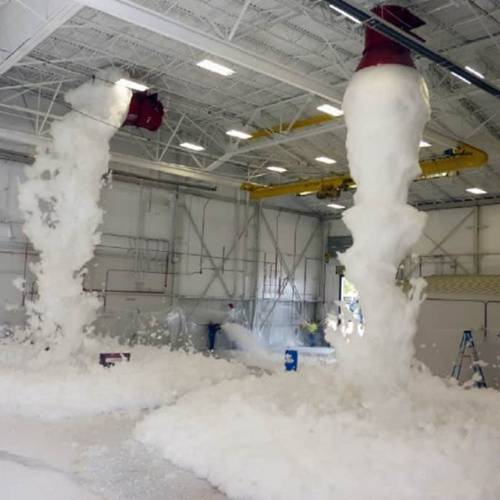
Automatic Foam Systems
Foam systems protect virtually any hazard where flammable liquids are present. These hazards are common to a multitude of industries including Petrochemical, Chemical, Oil and Gas, Aviation, Marine/Offshore, Manufacturing, Utilities,
- Military, and Transportation.
- Flammable Liquid Storage
- Loading Racks
- Processing Areas
- Refineries
- Dike Areas
- Aircraft Hangars
- Heliports
- Jet Engine Test Facilities
- LNG Storage/Manufacturing
- Marine Applications
- Warehouses
How Foam Systems Work
Fire fighting foam systems suppress fire by separating the fuel from the air (oxygen). Depending on the type of foam system, this is done in several ways:
The following represents operation of a typical foam-water sprinkler system.
Although many other types of systems are available; a basic foam system will always require foam agent storage, proportioning equipment, one or more discharge devices, and a manual and/or automatic means of detecting the fire and actuating the system.
Fire breaks out in the rack storage area of a flammable liquid warehouse.
Rising heat from the fire ruptures the quartzoid bulb(s) in the sprinkler head(s) which starts the flow of water.
Flowing water opens the alarm check valve which allows water to open the hydraulic foam concentrate valve and operate the water-motor gong.
Foam concentrate flows from the bladder tank into the proportioner where it is mixed with the flowing water at the designed foam solution percentage.
Foam is generated as the foam solution discharges through the sprinkler head(s) onto the fire.

- Fire Check
- 10 Cassiafield Grove Springfield Park, Durban 4091, Springfield Park, Durban, KwaZulu-Natal, South Africa(4091)
- 0315794890
More Services From This Store
More Services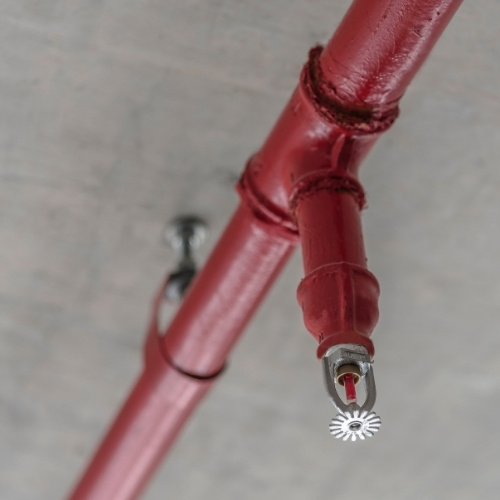
Wet pipe systems
Fire Check
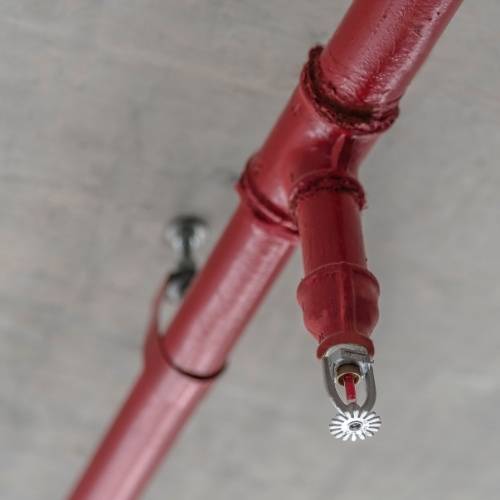
Wet pipe systems
By a wide margin, wet pipe sprinkler systems are installed more often than all other types of fire sprinkler systems. They also are the most reliable, because they are simple, with the only operating components being the automatic sprinklers and (commonly, but not always) the automatic alarm check valve. An automatic water supply provides water under pressure to the system piping.
Operation - When an automatic sprinkler is exposed for a sufficient time to a temperature at or above the temperature rating, the heat sensitive element (glass bulb or fusible link) releases, allowing water to flow from that sprinkler.
Dry pipe systems
Fire Check
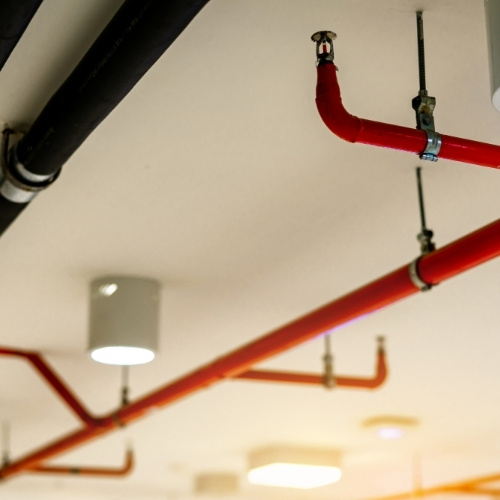
Dry pipe systems
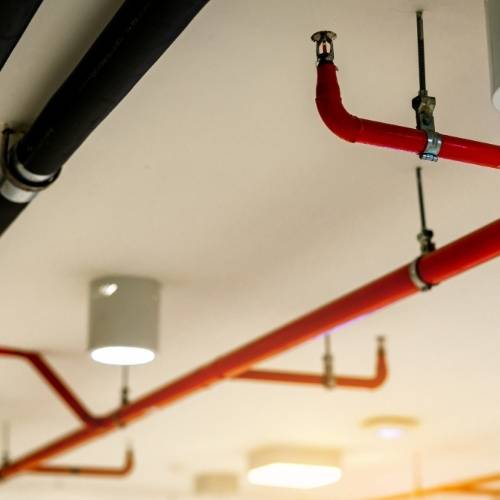
Dry pipe systems are installed in spaces in which the ambient temperature may be cold enough to freeze the water in a wet pipe system, rendering the system inoperable. Dry pipe systems are most often used in unheated buildings, in parking garages, in outside canopies attached to heated buildings (in which a wet pipe system would be provided), or in refrigerated coolers. Dry pipe systems are the second most common sprinkler system type. In regions using NFPA regulations, dry pipe systems cannot be installed unless the range of ambient temperatures reaches below 40F[4].
Operation - Water is not present in the piping until the system operates. The piping is filled with air below the water supply pressure. To prevent the larger water supply pressure from forcing water into the piping, the design of the dry pipe valve (a specialized type of check valve) results in a greater force on top of the check valve clapper by the use of a larger valve clapper area exposed to the piping air pressure, as compared to the higher water pressure but smaller clapper surface area.
When one or more of the automatic sprinklers is exposed to for a sufficient time to a temperature at or above the temperature rating, it opens, allowing the air in the piping to vent from that sprinkler. Each sprinkler operates individually. As the air pressure in the piping drops, the pressure differential across the dry pipe valve changes, allowing water to enter the piping system. Water flow from sprinklers needed to control the fire is delayed until the air is vented from the sprinklers. For this reason, dry pipe systems are usually not as effective as wet pipe systems in fire control during the initial stages of the fire.
Some view dry pipe sprinklers as advantageous for protection of collections and other water sensitive areas. This perceived benefit is due to a fear that wet system piping may leak, while dry pipe systems will not. However, the same potential for accidental water damage exists, as dry pipe systems will only provide a slight delay prior to water discharge while the air in the piping is released from the pipe.
Disadvantages of using dry pipe fire sprinkler systems include:
- Increased complexity - Dry pipe systems require additional control equipment and air pressure supply components which increases system complexity. This puts a premium on proper maintenance, as this increase in system complexity results in an inherently less reliable overall system (i.e., more single failure points) as compared to a wet pipe system.
- Higher installation and maintenance costs - The added complexity impacts the overall dry-pipe installation cost, and increases maintenance expenditure primarily due to added service labor costs.
- Lower design flexibility - Regulatory requirements limit the maximum permitted size (i.e., 750 gallons) of individual dry-pipe systems, unless additional components and design efforts are provided to limit the time from sprinkler activation to water discharge to under one minute. These limitations may increase the number of individual sprinkler systems (i.e., served from a single riser) that must be provided in the building, and impact the ability of an owner to make system additions.
- Increased fire response time - Because the piping is empty at the time the sprinkler operates, there is an inherent time delay in delivering water to the sprinklers which have operated while the water travels from the riser to the sprinkler, partially filling the piping in the process. A maximum of 60 seconds is normally allowed by regulatory requirements from the time a single sprinkler opens until water is discharged onto the fire. This delay in fire suppression results in a larger fire prior to control, increasing property damage.
- Increased corrosion potential - Following operation or testing, dry-pipe sprinkler system piping is drained, but residual water collects in piping low spots, and moisture is also retained in the atmosphere within the piping. This moisture, coupled with the oxygen available in the compressed air in the piping, increases pipe internal wall corrosion rates, possibly eventually leading to leaks. The internal pipe wall corrosion rate in wet pipe systems (in which the piping is constantly full of water) is much lower, as the amount of oxygen available for the corrosion process is lower.
Deluge systems
Fire Check
Deluge systems
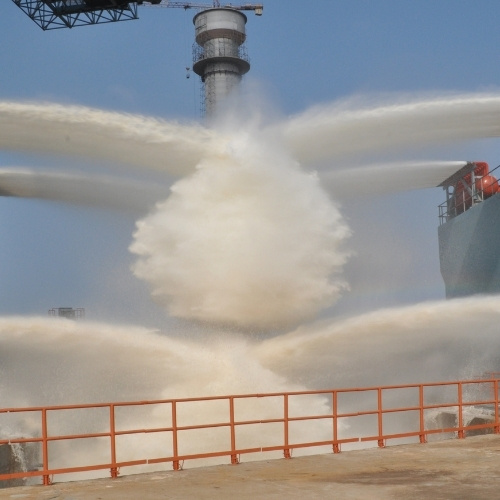
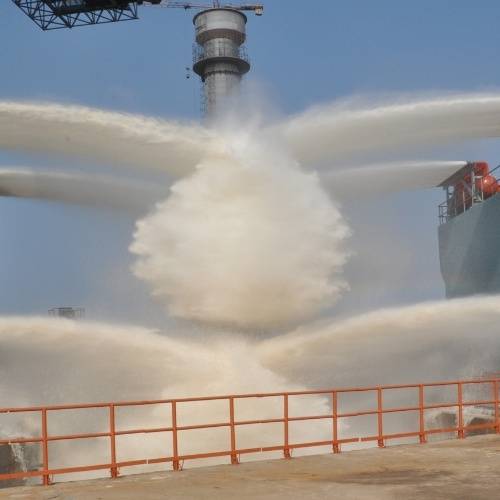
"Deluge" systems are systems in which all sprinklers connected to the water piping system are open, in that the heat sensing operating element is removed, or specifically designed as such. These systems are used for special hazards where rapid fire spread is a concern, as they provide a simultaneous application of water over the entire hazard. They are sometimes installed in personnel egress paths or building openings to slow travel of fire (e.g., openings in a fire-rated wall).
Water is not present in the piping until the system operates. Because the sprinkler orifices are open, the piping is at atmospheric pressure. To prevent the water supply pressure from forcing water into the piping, a deluge valve is used in the water supply connection, which is a mechanically latched valve. It is a non-resetting valve, and stays open once tripped.
Because the heat sensing elements present in the automatic sprinklers have been removed (resulting in open sprinklers), the deluge valve must be opened as signaled by a fire alarm system. The type of fire alarm initiating device is selected mainly based on the hazard (e.g., smoke detectors, heat detectors, or optical flame detectors). The initiation device signals the fire alarm panel, which in turn signals the deluge valve to open. Activation can also be manual, depending on the system goals. Manual activation is usually via an electric or pneumatic fire alarm pull station, which signals the fire alarm panel, which in turn signals the deluge valve to open.
Operation - Activation of a fire alarm initiating device, or a manual pull station, signals the fire alarm panel, which in turn signals the deluge valve to open, allowing water to enter the piping system. Water flows from all sprinklers simultaneously.
Related Services
Wet pipe systems
Fire Check
Wet pipe systems
By a wide margin, wet pipe sprinkler systems are installed more often than all other types of fire sprinkler systems. They also are the most reliable, because they are simple, with the only operating components being the automatic sprinklers and (commonly, but not always) the automatic alarm check valve. An automatic water supply provides water under pressure to the system piping.
Operation - When an automatic sprinkler is exposed for a sufficient time to a temperature at or above the temperature rating, the heat sensitive element (glass bulb or fusible link) releases, allowing water to flow from that sprinkler.
Dry pipe systems
Fire Check
Dry pipe systems
Dry pipe systems are installed in spaces in which the ambient temperature may be cold enough to freeze the water in a wet pipe system, rendering the system inoperable. Dry pipe systems are most often used in unheated buildings, in parking garages, in outside canopies attached to heated buildings (in which a wet pipe system would be provided), or in refrigerated coolers. Dry pipe systems are the second most common sprinkler system type. In regions using NFPA regulations, dry pipe systems cannot be installed unless the range of ambient temperatures reaches below 40F[4].
Operation - Water is not present in the piping until the system operates. The piping is filled with air below the water supply pressure. To prevent the larger water supply pressure from forcing water into the piping, the design of the dry pipe valve (a specialized type of check valve) results in a greater force on top of the check valve clapper by the use of a larger valve clapper area exposed to the piping air pressure, as compared to the higher water pressure but smaller clapper surface area.
When one or more of the automatic sprinklers is exposed to for a sufficient time to a temperature at or above the temperature rating, it opens, allowing the air in the piping to vent from that sprinkler. Each sprinkler operates individually. As the air pressure in the piping drops, the pressure differential across the dry pipe valve changes, allowing water to enter the piping system. Water flow from sprinklers needed to control the fire is delayed until the air is vented from the sprinklers. For this reason, dry pipe systems are usually not as effective as wet pipe systems in fire control during the initial stages of the fire.
Some view dry pipe sprinklers as advantageous for protection of collections and other water sensitive areas. This perceived benefit is due to a fear that wet system piping may leak, while dry pipe systems will not. However, the same potential for accidental water damage exists, as dry pipe systems will only provide a slight delay prior to water discharge while the air in the piping is released from the pipe.
Disadvantages of using dry pipe fire sprinkler systems include:
- Increased complexity - Dry pipe systems require additional control equipment and air pressure supply components which increases system complexity. This puts a premium on proper maintenance, as this increase in system complexity results in an inherently less reliable overall system (i.e., more single failure points) as compared to a wet pipe system.
- Higher installation and maintenance costs - The added complexity impacts the overall dry-pipe installation cost, and increases maintenance expenditure primarily due to added service labor costs.
- Lower design flexibility - Regulatory requirements limit the maximum permitted size (i.e., 750 gallons) of individual dry-pipe systems, unless additional components and design efforts are provided to limit the time from sprinkler activation to water discharge to under one minute. These limitations may increase the number of individual sprinkler systems (i.e., served from a single riser) that must be provided in the building, and impact the ability of an owner to make system additions.
- Increased fire response time - Because the piping is empty at the time the sprinkler operates, there is an inherent time delay in delivering water to the sprinklers which have operated while the water travels from the riser to the sprinkler, partially filling the piping in the process. A maximum of 60 seconds is normally allowed by regulatory requirements from the time a single sprinkler opens until water is discharged onto the fire. This delay in fire suppression results in a larger fire prior to control, increasing property damage.
- Increased corrosion potential - Following operation or testing, dry-pipe sprinkler system piping is drained, but residual water collects in piping low spots, and moisture is also retained in the atmosphere within the piping. This moisture, coupled with the oxygen available in the compressed air in the piping, increases pipe internal wall corrosion rates, possibly eventually leading to leaks. The internal pipe wall corrosion rate in wet pipe systems (in which the piping is constantly full of water) is much lower, as the amount of oxygen available for the corrosion process is lower.
Deluge systems
Fire Check
Deluge systems
"Deluge" systems are systems in which all sprinklers connected to the water piping system are open, in that the heat sensing operating element is removed, or specifically designed as such. These systems are used for special hazards where rapid fire spread is a concern, as they provide a simultaneous application of water over the entire hazard. They are sometimes installed in personnel egress paths or building openings to slow travel of fire (e.g., openings in a fire-rated wall).
Water is not present in the piping until the system operates. Because the sprinkler orifices are open, the piping is at atmospheric pressure. To prevent the water supply pressure from forcing water into the piping, a deluge valve is used in the water supply connection, which is a mechanically latched valve. It is a non-resetting valve, and stays open once tripped.
Because the heat sensing elements present in the automatic sprinklers have been removed (resulting in open sprinklers), the deluge valve must be opened as signaled by a fire alarm system. The type of fire alarm initiating device is selected mainly based on the hazard (e.g., smoke detectors, heat detectors, or optical flame detectors). The initiation device signals the fire alarm panel, which in turn signals the deluge valve to open. Activation can also be manual, depending on the system goals. Manual activation is usually via an electric or pneumatic fire alarm pull station, which signals the fire alarm panel, which in turn signals the deluge valve to open.
Operation - Activation of a fire alarm initiating device, or a manual pull station, signals the fire alarm panel, which in turn signals the deluge valve to open, allowing water to enter the piping system. Water flows from all sprinklers simultaneously.