
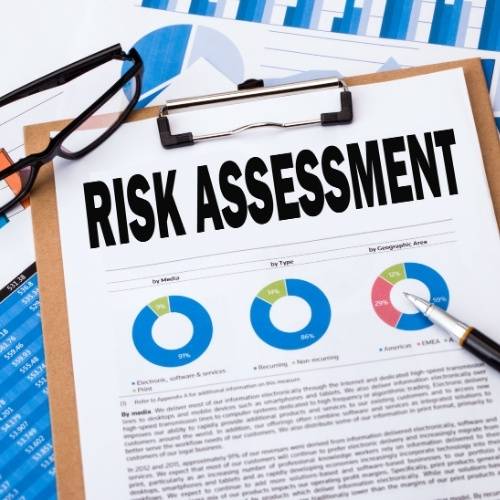
Fire Risk Assessment
A fire risk assessment is an organised and methodical look at your premises, the activities carried on there and the likelihood that a fire could start and cause harm to those in and around the premises.
The aims of the fire risk assessment are:
* To identify the fire hazards.
* To reduce the risk of those hazards causing harm to as low as reasonably practicable.
* To decide what physical fire precautions and management arrangements are necessary to ensure the safety of people in your building if a fire does start.
If your organisation employs five or more people, or your premises are licensed or an alterations notice requiring it is in force, then the significant findings of the fire risk assessment, the actions to be taken as a result of the assessment and details of anyone especially at risk must be recorded. You will probably find it helpful to keep a record of the significant findings of your fire risk assessment even if you are not required to do so.
How do I carry out a fire risk assessment?
A fire risk assessment will help you determine the chances of a fire starting and the dangers from fire that your premises present for the people who use them and any person in the immediate vicinity.
Much of the information for your fire risk assessment will come from the knowledge your employees, colleagues and representatives have of the premises, as well as information given to you by people who have responsibility for other parts of the building. A tour of your premises will probably be needed to confirm, amend or add detail to your initial views.
It is important that you carry out your fire risk assessment in a practical and systematic way and that you allocate enough time to do a proper job. It must take the whole of your premises into account, including outdoor locations and any rooms and areas that are rarely used. If your premises are small you may be able to assess them as a whole. In larger premises you may find it helpful to divide them into rooms or a series of assessment areas using natural boundaries, e.g. areas such as kitchens or laundries, bedrooms, offices, stores, as well as corridors, stairways and external routes.
Under health and safety law (enforced by the HSE or the local authority) you are required to carry out a risk assessment in respect of any activities in your premises and to take or observe appropriate special, technical or organisational measures. If your health and safety risk assessment identifies that these activities are likely to involve the risk of fire or the spread of fire (for example in the kitchen or in a workshop) then you will need to take this into account during your fire risk assessment under the Order and prioritise actions based on the level of risk.
You need to appoint one or more‚ competent persons‚ (this could be you) to carry out any of the preventive and protective measures needed to comply with the Order. This person could be an appropriately trained employee or, where appropriate, a third party.
Your fire risk assessment should demonstrate that, as far as is reasonable, you have considered the needs of all relevant people, including disabled people.
Step 1 - Identify the hazards within your premises
You need to identify:
* sources of ignition such as naked flames, heaters or some commercial processes;
* sources of fuel such as built-up waste, display materials, textiles or overstocked products; and
* sources of oxygen such as air conditioning or medicinal or commercial oxygen supplies.
Step 2 - Identify people at risk
You will need to identify those people who may be especially at risk such as:
* people working near to fire dangers;
* people working alone or in isolated areas (such as in roof spaces or storerooms);
* children or parents with babies; and the elderly or infirm and people who are disabled.
Step 3 - Evaluate, remove, reduce and protect from risk
Evaluate the level of risk in your premises. You should remove or reduce any fire hazards where possible and reduce any risks you have identified. For example, you should:
* replace highly flammable materials with less flammable ones;
* make sure you separate flammable materials from sources of ignition; and
* have a safe-smoking policy.
When you have reduced the risk as far as possible, you must assess any risk that is left and decide whether there are any further measures you need to take to make sure you provide a reasonable level of fire safety.
Step 4 - Record, plan, instruct, inform and train
In this step you should record, plan, instruct, inform and train. You will need to record the dangers and people you have identified as especially at risk in step 1 and step 2. You should also record what you did about it in step 3. A simple plan can help you achieve this.
You will also need to make an emergency plan, tailored to your premises. It should include the action that you need to take in a fire in your premises or any premises nearby.
You will need to give staff, and occasionally others, such as hotel guests or volunteer stewards, instructions. All employees should receive enough information and training about the risks in the premises. Some, such as fire marshals, will need more thorough training.
Step 5 - Review
You should make sure your fire-risk assessment is up to date. You will need to re-examine your fire-risk assessment if you suspect it is no longer valid, such as after a near miss and every time there is a significant change to the level of risk in your premises. This could include:
* if you store more materials which can catch fire easily;
* a new night shift starting; or
* a change in the type or number of people using your premises.

- Fire Check
- 10 Cassiafield Grove Springfield Park, Durban 4091, Springfield Park, Durban, KwaZulu-Natal, South Africa(4091)
- 0315794890
More Services From This Store
More Services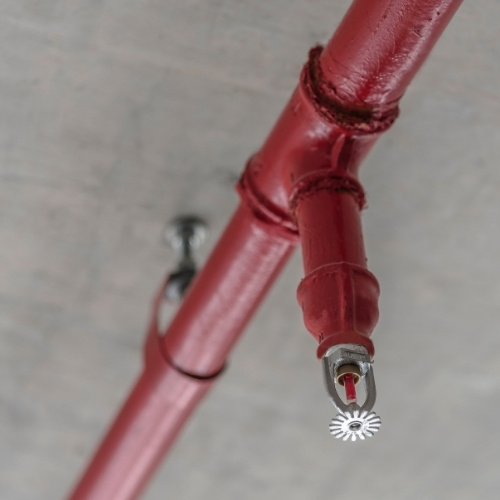
Wet pipe systems
Fire Check
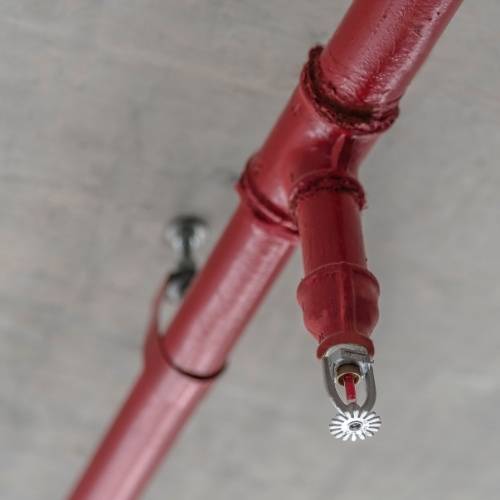
Wet pipe systems
By a wide margin, wet pipe sprinkler systems are installed more often than all other types of fire sprinkler systems. They also are the most reliable, because they are simple, with the only operating components being the automatic sprinklers and (commonly, but not always) the automatic alarm check valve. An automatic water supply provides water under pressure to the system piping.
Operation - When an automatic sprinkler is exposed for a sufficient time to a temperature at or above the temperature rating, the heat sensitive element (glass bulb or fusible link) releases, allowing water to flow from that sprinkler.
Dry pipe systems
Fire Check
Dry pipe systems
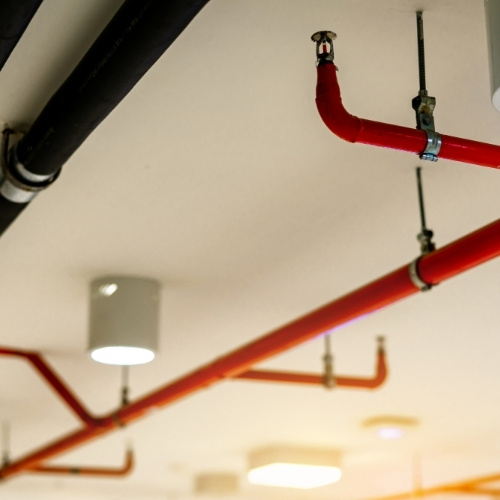
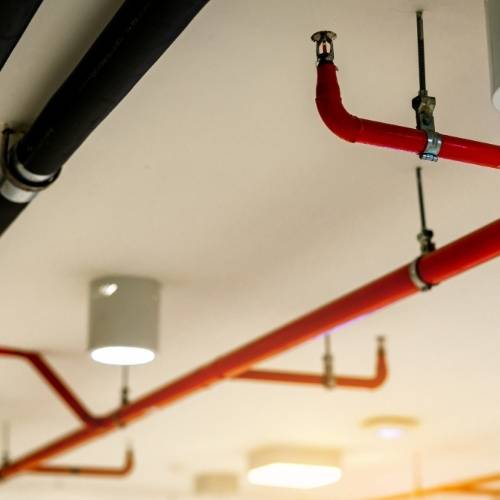
Dry pipe systems are installed in spaces in which the ambient temperature may be cold enough to freeze the water in a wet pipe system, rendering the system inoperable. Dry pipe systems are most often used in unheated buildings, in parking garages, in outside canopies attached to heated buildings (in which a wet pipe system would be provided), or in refrigerated coolers. Dry pipe systems are the second most common sprinkler system type. In regions using NFPA regulations, dry pipe systems cannot be installed unless the range of ambient temperatures reaches below 40F[4].
Operation - Water is not present in the piping until the system operates. The piping is filled with air below the water supply pressure. To prevent the larger water supply pressure from forcing water into the piping, the design of the dry pipe valve (a specialized type of check valve) results in a greater force on top of the check valve clapper by the use of a larger valve clapper area exposed to the piping air pressure, as compared to the higher water pressure but smaller clapper surface area.
When one or more of the automatic sprinklers is exposed to for a sufficient time to a temperature at or above the temperature rating, it opens, allowing the air in the piping to vent from that sprinkler. Each sprinkler operates individually. As the air pressure in the piping drops, the pressure differential across the dry pipe valve changes, allowing water to enter the piping system. Water flow from sprinklers needed to control the fire is delayed until the air is vented from the sprinklers. For this reason, dry pipe systems are usually not as effective as wet pipe systems in fire control during the initial stages of the fire.
Some view dry pipe sprinklers as advantageous for protection of collections and other water sensitive areas. This perceived benefit is due to a fear that wet system piping may leak, while dry pipe systems will not. However, the same potential for accidental water damage exists, as dry pipe systems will only provide a slight delay prior to water discharge while the air in the piping is released from the pipe.
Disadvantages of using dry pipe fire sprinkler systems include:
- Increased complexity - Dry pipe systems require additional control equipment and air pressure supply components which increases system complexity. This puts a premium on proper maintenance, as this increase in system complexity results in an inherently less reliable overall system (i.e., more single failure points) as compared to a wet pipe system.
- Higher installation and maintenance costs - The added complexity impacts the overall dry-pipe installation cost, and increases maintenance expenditure primarily due to added service labor costs.
- Lower design flexibility - Regulatory requirements limit the maximum permitted size (i.e., 750 gallons) of individual dry-pipe systems, unless additional components and design efforts are provided to limit the time from sprinkler activation to water discharge to under one minute. These limitations may increase the number of individual sprinkler systems (i.e., served from a single riser) that must be provided in the building, and impact the ability of an owner to make system additions.
- Increased fire response time - Because the piping is empty at the time the sprinkler operates, there is an inherent time delay in delivering water to the sprinklers which have operated while the water travels from the riser to the sprinkler, partially filling the piping in the process. A maximum of 60 seconds is normally allowed by regulatory requirements from the time a single sprinkler opens until water is discharged onto the fire. This delay in fire suppression results in a larger fire prior to control, increasing property damage.
- Increased corrosion potential - Following operation or testing, dry-pipe sprinkler system piping is drained, but residual water collects in piping low spots, and moisture is also retained in the atmosphere within the piping. This moisture, coupled with the oxygen available in the compressed air in the piping, increases pipe internal wall corrosion rates, possibly eventually leading to leaks. The internal pipe wall corrosion rate in wet pipe systems (in which the piping is constantly full of water) is much lower, as the amount of oxygen available for the corrosion process is lower.
Deluge systems
Fire Check
Deluge systems
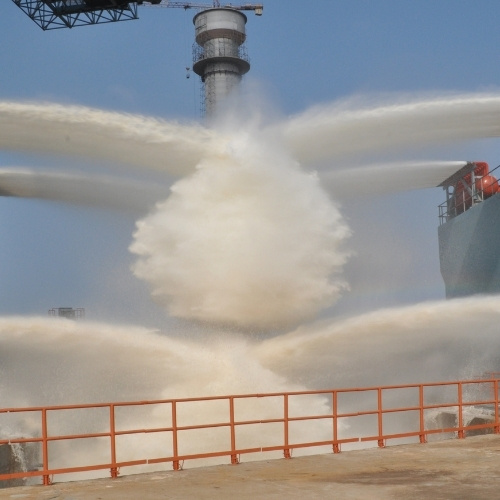
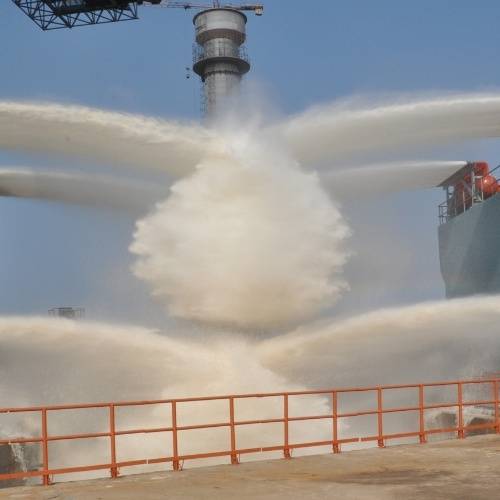
"Deluge" systems are systems in which all sprinklers connected to the water piping system are open, in that the heat sensing operating element is removed, or specifically designed as such. These systems are used for special hazards where rapid fire spread is a concern, as they provide a simultaneous application of water over the entire hazard. They are sometimes installed in personnel egress paths or building openings to slow travel of fire (e.g., openings in a fire-rated wall).
Water is not present in the piping until the system operates. Because the sprinkler orifices are open, the piping is at atmospheric pressure. To prevent the water supply pressure from forcing water into the piping, a deluge valve is used in the water supply connection, which is a mechanically latched valve. It is a non-resetting valve, and stays open once tripped.
Because the heat sensing elements present in the automatic sprinklers have been removed (resulting in open sprinklers), the deluge valve must be opened as signaled by a fire alarm system. The type of fire alarm initiating device is selected mainly based on the hazard (e.g., smoke detectors, heat detectors, or optical flame detectors). The initiation device signals the fire alarm panel, which in turn signals the deluge valve to open. Activation can also be manual, depending on the system goals. Manual activation is usually via an electric or pneumatic fire alarm pull station, which signals the fire alarm panel, which in turn signals the deluge valve to open.
Operation - Activation of a fire alarm initiating device, or a manual pull station, signals the fire alarm panel, which in turn signals the deluge valve to open, allowing water to enter the piping system. Water flows from all sprinklers simultaneously.
Related Services
Wet pipe systems
Fire Check
Wet pipe systems
By a wide margin, wet pipe sprinkler systems are installed more often than all other types of fire sprinkler systems. They also are the most reliable, because they are simple, with the only operating components being the automatic sprinklers and (commonly, but not always) the automatic alarm check valve. An automatic water supply provides water under pressure to the system piping.
Operation - When an automatic sprinkler is exposed for a sufficient time to a temperature at or above the temperature rating, the heat sensitive element (glass bulb or fusible link) releases, allowing water to flow from that sprinkler.
Dry pipe systems
Fire Check
Dry pipe systems
Dry pipe systems are installed in spaces in which the ambient temperature may be cold enough to freeze the water in a wet pipe system, rendering the system inoperable. Dry pipe systems are most often used in unheated buildings, in parking garages, in outside canopies attached to heated buildings (in which a wet pipe system would be provided), or in refrigerated coolers. Dry pipe systems are the second most common sprinkler system type. In regions using NFPA regulations, dry pipe systems cannot be installed unless the range of ambient temperatures reaches below 40F[4].
Operation - Water is not present in the piping until the system operates. The piping is filled with air below the water supply pressure. To prevent the larger water supply pressure from forcing water into the piping, the design of the dry pipe valve (a specialized type of check valve) results in a greater force on top of the check valve clapper by the use of a larger valve clapper area exposed to the piping air pressure, as compared to the higher water pressure but smaller clapper surface area.
When one or more of the automatic sprinklers is exposed to for a sufficient time to a temperature at or above the temperature rating, it opens, allowing the air in the piping to vent from that sprinkler. Each sprinkler operates individually. As the air pressure in the piping drops, the pressure differential across the dry pipe valve changes, allowing water to enter the piping system. Water flow from sprinklers needed to control the fire is delayed until the air is vented from the sprinklers. For this reason, dry pipe systems are usually not as effective as wet pipe systems in fire control during the initial stages of the fire.
Some view dry pipe sprinklers as advantageous for protection of collections and other water sensitive areas. This perceived benefit is due to a fear that wet system piping may leak, while dry pipe systems will not. However, the same potential for accidental water damage exists, as dry pipe systems will only provide a slight delay prior to water discharge while the air in the piping is released from the pipe.
Disadvantages of using dry pipe fire sprinkler systems include:
- Increased complexity - Dry pipe systems require additional control equipment and air pressure supply components which increases system complexity. This puts a premium on proper maintenance, as this increase in system complexity results in an inherently less reliable overall system (i.e., more single failure points) as compared to a wet pipe system.
- Higher installation and maintenance costs - The added complexity impacts the overall dry-pipe installation cost, and increases maintenance expenditure primarily due to added service labor costs.
- Lower design flexibility - Regulatory requirements limit the maximum permitted size (i.e., 750 gallons) of individual dry-pipe systems, unless additional components and design efforts are provided to limit the time from sprinkler activation to water discharge to under one minute. These limitations may increase the number of individual sprinkler systems (i.e., served from a single riser) that must be provided in the building, and impact the ability of an owner to make system additions.
- Increased fire response time - Because the piping is empty at the time the sprinkler operates, there is an inherent time delay in delivering water to the sprinklers which have operated while the water travels from the riser to the sprinkler, partially filling the piping in the process. A maximum of 60 seconds is normally allowed by regulatory requirements from the time a single sprinkler opens until water is discharged onto the fire. This delay in fire suppression results in a larger fire prior to control, increasing property damage.
- Increased corrosion potential - Following operation or testing, dry-pipe sprinkler system piping is drained, but residual water collects in piping low spots, and moisture is also retained in the atmosphere within the piping. This moisture, coupled with the oxygen available in the compressed air in the piping, increases pipe internal wall corrosion rates, possibly eventually leading to leaks. The internal pipe wall corrosion rate in wet pipe systems (in which the piping is constantly full of water) is much lower, as the amount of oxygen available for the corrosion process is lower.
Deluge systems
Fire Check
Deluge systems
"Deluge" systems are systems in which all sprinklers connected to the water piping system are open, in that the heat sensing operating element is removed, or specifically designed as such. These systems are used for special hazards where rapid fire spread is a concern, as they provide a simultaneous application of water over the entire hazard. They are sometimes installed in personnel egress paths or building openings to slow travel of fire (e.g., openings in a fire-rated wall).
Water is not present in the piping until the system operates. Because the sprinkler orifices are open, the piping is at atmospheric pressure. To prevent the water supply pressure from forcing water into the piping, a deluge valve is used in the water supply connection, which is a mechanically latched valve. It is a non-resetting valve, and stays open once tripped.
Because the heat sensing elements present in the automatic sprinklers have been removed (resulting in open sprinklers), the deluge valve must be opened as signaled by a fire alarm system. The type of fire alarm initiating device is selected mainly based on the hazard (e.g., smoke detectors, heat detectors, or optical flame detectors). The initiation device signals the fire alarm panel, which in turn signals the deluge valve to open. Activation can also be manual, depending on the system goals. Manual activation is usually via an electric or pneumatic fire alarm pull station, which signals the fire alarm panel, which in turn signals the deluge valve to open.
Operation - Activation of a fire alarm initiating device, or a manual pull station, signals the fire alarm panel, which in turn signals the deluge valve to open, allowing water to enter the piping system. Water flows from all sprinklers simultaneously.