

Integrated Security Systems
Closed-circuit television (CCTV) is the use of video cameras to transmit a signal to a specific place, on a limited set of monitors.
It differs from broadcast television in that the signal is not openly transmitted, though it may employ point to point (P2P), point to multipoint, or mesh wireless links. Though almost all video cameras fit this definition, the term is most often applied to those used for surveillance in areas that may need monitoring such as banks, casinos, airports, military installations, and convenience stores. Videotelephony is seldom called "CCTV" but the use of video in distance education, where it is an important tool, is often so called.
In industrial plants, CCTV equipment may be used to observe parts of a process from a central control room, for example when the environment is not suitable for humans. CCTV systems may operate continuously or only as required to monitor a particular event. A more advanced form of CCTV, utilizing Digital Video Recorders (DVRs), provides recording for possibly many years, with a variety of quality and performance options and extra features (such as motion-detection and email alerts). More recently, decentralized IP-based CCTV cameras, some equipped with megapixel sensors, support recording directly to network-attached storage devices, or internal flash for completely stand-alone operation.
Access control refers to exerting control over who can interact with a resource. Often but not always, this involves an authority, who does the controlling. The resource can be a given building, group of buildings, or computer-based information system. But it can also refer to a restroom stall where access is controlled by using a coin to open the door.
Access control is, in reality, an everyday phenomenon. A lock on a car door is essentially a form of access control. A PIN on an ATM system at a bank is another means of access control. The possession of access control is of prime importance when persons seek to secure important, confidential, or sensitive information and equipment.
Physical access control is a matter of who, where, and when. An access control system determines who is allowed to enter or exit, where they are allowed to exit or enter, and when they are allowed to enter or exit. Historically this was partially accomplished through keys and locks. When a door is locked only someone with a key can enter through the door depending on how the lock is configured. Mechanical locks and keys do not allow restriction of the key holder to specific times or dates. Mechanical locks and keys do not provide records of the key used on any specific door and the keys can be easily copied or transferred to an unauthorized person. When a mechanical key is lost or the key holder is no longer authorized to use the protected area, the locks must be re-keyed.
Electronic access control uses computers to solve the limitations of mechanical locks and keys. A wide range of credentials can be used to replace mechanical keys. The electronic access control system grants access based on the credential presented. When access is granted, the door is unlocked for a predetermined time and the transaction is recorded. When access is refused, the door remains locked and the attempted access is recorded. The system will also monitor the door and alarm if the door is forced open or held open too long after being unlocked.

- Fire Check
- 10 Cassiafield Grove Springfield Park, Durban 4091, Springfield Park, Durban, KwaZulu-Natal, South Africa(4091)
- 0315794890
More Services From This Store
More Services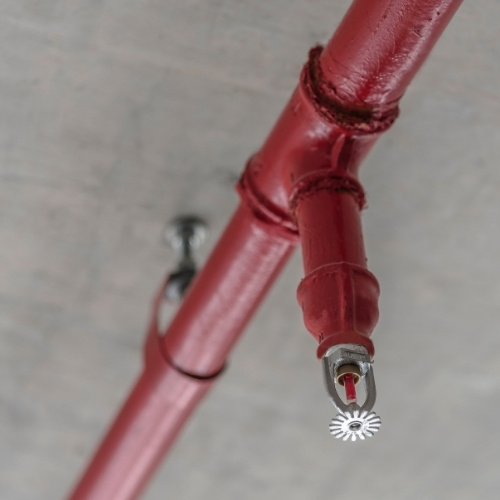
Wet pipe systems
Fire Check
Wet pipe systems
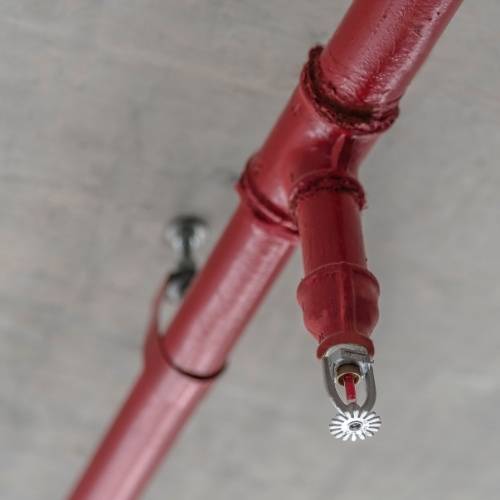
By a wide margin, wet pipe sprinkler systems are installed more often than all other types of fire sprinkler systems. They also are the most reliable, because they are simple, with the only operating components being the automatic sprinklers and (commonly, but not always) the automatic alarm check valve. An automatic water supply provides water under pressure to the system piping.
Operation - When an automatic sprinkler is exposed for a sufficient time to a temperature at or above the temperature rating, the heat sensitive element (glass bulb or fusible link) releases, allowing water to flow from that sprinkler.
Dry pipe systems
Fire Check
Dry pipe systems
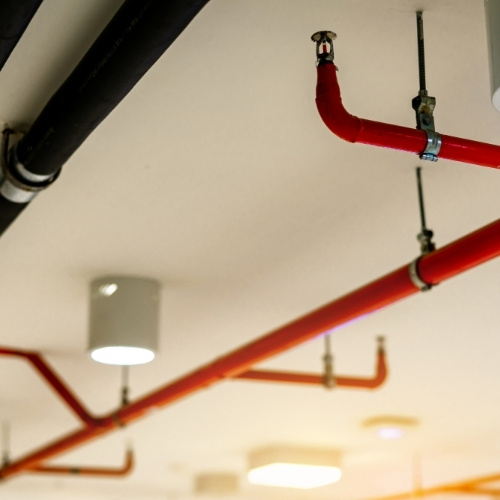
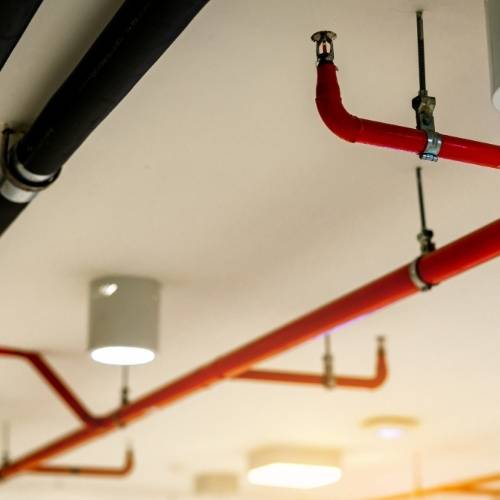
Dry pipe systems are installed in spaces in which the ambient temperature may be cold enough to freeze the water in a wet pipe system, rendering the system inoperable. Dry pipe systems are most often used in unheated buildings, in parking garages, in outside canopies attached to heated buildings (in which a wet pipe system would be provided), or in refrigerated coolers. Dry pipe systems are the second most common sprinkler system type. In regions using NFPA regulations, dry pipe systems cannot be installed unless the range of ambient temperatures reaches below 40F[4].
Operation - Water is not present in the piping until the system operates. The piping is filled with air below the water supply pressure. To prevent the larger water supply pressure from forcing water into the piping, the design of the dry pipe valve (a specialized type of check valve) results in a greater force on top of the check valve clapper by the use of a larger valve clapper area exposed to the piping air pressure, as compared to the higher water pressure but smaller clapper surface area.
When one or more of the automatic sprinklers is exposed to for a sufficient time to a temperature at or above the temperature rating, it opens, allowing the air in the piping to vent from that sprinkler. Each sprinkler operates individually. As the air pressure in the piping drops, the pressure differential across the dry pipe valve changes, allowing water to enter the piping system. Water flow from sprinklers needed to control the fire is delayed until the air is vented from the sprinklers. For this reason, dry pipe systems are usually not as effective as wet pipe systems in fire control during the initial stages of the fire.
Some view dry pipe sprinklers as advantageous for protection of collections and other water sensitive areas. This perceived benefit is due to a fear that wet system piping may leak, while dry pipe systems will not. However, the same potential for accidental water damage exists, as dry pipe systems will only provide a slight delay prior to water discharge while the air in the piping is released from the pipe.
Disadvantages of using dry pipe fire sprinkler systems include:
- Increased complexity - Dry pipe systems require additional control equipment and air pressure supply components which increases system complexity. This puts a premium on proper maintenance, as this increase in system complexity results in an inherently less reliable overall system (i.e., more single failure points) as compared to a wet pipe system.
- Higher installation and maintenance costs - The added complexity impacts the overall dry-pipe installation cost, and increases maintenance expenditure primarily due to added service labor costs.
- Lower design flexibility - Regulatory requirements limit the maximum permitted size (i.e., 750 gallons) of individual dry-pipe systems, unless additional components and design efforts are provided to limit the time from sprinkler activation to water discharge to under one minute. These limitations may increase the number of individual sprinkler systems (i.e., served from a single riser) that must be provided in the building, and impact the ability of an owner to make system additions.
- Increased fire response time - Because the piping is empty at the time the sprinkler operates, there is an inherent time delay in delivering water to the sprinklers which have operated while the water travels from the riser to the sprinkler, partially filling the piping in the process. A maximum of 60 seconds is normally allowed by regulatory requirements from the time a single sprinkler opens until water is discharged onto the fire. This delay in fire suppression results in a larger fire prior to control, increasing property damage.
- Increased corrosion potential - Following operation or testing, dry-pipe sprinkler system piping is drained, but residual water collects in piping low spots, and moisture is also retained in the atmosphere within the piping. This moisture, coupled with the oxygen available in the compressed air in the piping, increases pipe internal wall corrosion rates, possibly eventually leading to leaks. The internal pipe wall corrosion rate in wet pipe systems (in which the piping is constantly full of water) is much lower, as the amount of oxygen available for the corrosion process is lower.
Deluge systems
Fire Check
Deluge systems
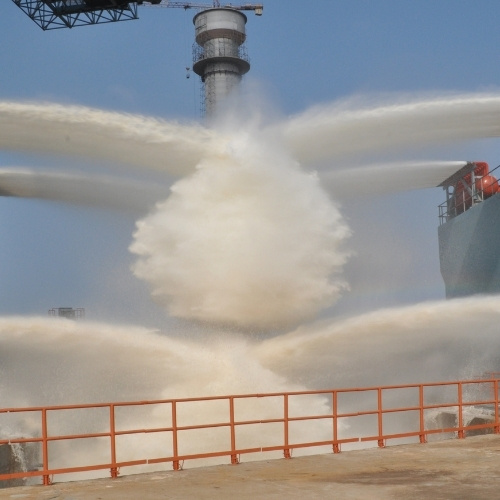
"Deluge" systems are systems in which all sprinklers connected to the water piping system are open, in that the heat sensing operating element is removed, or specifically designed as such. These systems are used for special hazards where rapid fire spread is a concern, as they provide a simultaneous application of water over the entire hazard. They are sometimes installed in personnel egress paths or building openings to slow travel of fire (e.g., openings in a fire-rated wall).
Water is not present in the piping until the system operates. Because the sprinkler orifices are open, the piping is at atmospheric pressure. To prevent the water supply pressure from forcing water into the piping, a deluge valve is used in the water supply connection, which is a mechanically latched valve. It is a non-resetting valve, and stays open once tripped.
Because the heat sensing elements present in the automatic sprinklers have been removed (resulting in open sprinklers), the deluge valve must be opened as signaled by a fire alarm system. The type of fire alarm initiating device is selected mainly based on the hazard (e.g., smoke detectors, heat detectors, or optical flame detectors). The initiation device signals the fire alarm panel, which in turn signals the deluge valve to open. Activation can also be manual, depending on the system goals. Manual activation is usually via an electric or pneumatic fire alarm pull station, which signals the fire alarm panel, which in turn signals the deluge valve to open.
Operation - Activation of a fire alarm initiating device, or a manual pull station, signals the fire alarm panel, which in turn signals the deluge valve to open, allowing water to enter the piping system. Water flows from all sprinklers simultaneously.
Related Services
Wet pipe systems
Fire Check
Wet pipe systems
By a wide margin, wet pipe sprinkler systems are installed more often than all other types of fire sprinkler systems. They also are the most reliable, because they are simple, with the only operating components being the automatic sprinklers and (commonly, but not always) the automatic alarm check valve. An automatic water supply provides water under pressure to the system piping.
Operation - When an automatic sprinkler is exposed for a sufficient time to a temperature at or above the temperature rating, the heat sensitive element (glass bulb or fusible link) releases, allowing water to flow from that sprinkler.
Dry pipe systems
Fire Check
Dry pipe systems
Dry pipe systems are installed in spaces in which the ambient temperature may be cold enough to freeze the water in a wet pipe system, rendering the system inoperable. Dry pipe systems are most often used in unheated buildings, in parking garages, in outside canopies attached to heated buildings (in which a wet pipe system would be provided), or in refrigerated coolers. Dry pipe systems are the second most common sprinkler system type. In regions using NFPA regulations, dry pipe systems cannot be installed unless the range of ambient temperatures reaches below 40F[4].
Operation - Water is not present in the piping until the system operates. The piping is filled with air below the water supply pressure. To prevent the larger water supply pressure from forcing water into the piping, the design of the dry pipe valve (a specialized type of check valve) results in a greater force on top of the check valve clapper by the use of a larger valve clapper area exposed to the piping air pressure, as compared to the higher water pressure but smaller clapper surface area.
When one or more of the automatic sprinklers is exposed to for a sufficient time to a temperature at or above the temperature rating, it opens, allowing the air in the piping to vent from that sprinkler. Each sprinkler operates individually. As the air pressure in the piping drops, the pressure differential across the dry pipe valve changes, allowing water to enter the piping system. Water flow from sprinklers needed to control the fire is delayed until the air is vented from the sprinklers. For this reason, dry pipe systems are usually not as effective as wet pipe systems in fire control during the initial stages of the fire.
Some view dry pipe sprinklers as advantageous for protection of collections and other water sensitive areas. This perceived benefit is due to a fear that wet system piping may leak, while dry pipe systems will not. However, the same potential for accidental water damage exists, as dry pipe systems will only provide a slight delay prior to water discharge while the air in the piping is released from the pipe.
Disadvantages of using dry pipe fire sprinkler systems include:
- Increased complexity - Dry pipe systems require additional control equipment and air pressure supply components which increases system complexity. This puts a premium on proper maintenance, as this increase in system complexity results in an inherently less reliable overall system (i.e., more single failure points) as compared to a wet pipe system.
- Higher installation and maintenance costs - The added complexity impacts the overall dry-pipe installation cost, and increases maintenance expenditure primarily due to added service labor costs.
- Lower design flexibility - Regulatory requirements limit the maximum permitted size (i.e., 750 gallons) of individual dry-pipe systems, unless additional components and design efforts are provided to limit the time from sprinkler activation to water discharge to under one minute. These limitations may increase the number of individual sprinkler systems (i.e., served from a single riser) that must be provided in the building, and impact the ability of an owner to make system additions.
- Increased fire response time - Because the piping is empty at the time the sprinkler operates, there is an inherent time delay in delivering water to the sprinklers which have operated while the water travels from the riser to the sprinkler, partially filling the piping in the process. A maximum of 60 seconds is normally allowed by regulatory requirements from the time a single sprinkler opens until water is discharged onto the fire. This delay in fire suppression results in a larger fire prior to control, increasing property damage.
- Increased corrosion potential - Following operation or testing, dry-pipe sprinkler system piping is drained, but residual water collects in piping low spots, and moisture is also retained in the atmosphere within the piping. This moisture, coupled with the oxygen available in the compressed air in the piping, increases pipe internal wall corrosion rates, possibly eventually leading to leaks. The internal pipe wall corrosion rate in wet pipe systems (in which the piping is constantly full of water) is much lower, as the amount of oxygen available for the corrosion process is lower.
Deluge systems
Fire Check
Deluge systems
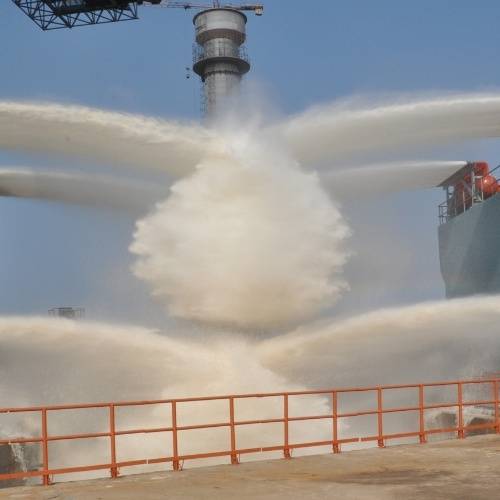
"Deluge" systems are systems in which all sprinklers connected to the water piping system are open, in that the heat sensing operating element is removed, or specifically designed as such. These systems are used for special hazards where rapid fire spread is a concern, as they provide a simultaneous application of water over the entire hazard. They are sometimes installed in personnel egress paths or building openings to slow travel of fire (e.g., openings in a fire-rated wall).
Water is not present in the piping until the system operates. Because the sprinkler orifices are open, the piping is at atmospheric pressure. To prevent the water supply pressure from forcing water into the piping, a deluge valve is used in the water supply connection, which is a mechanically latched valve. It is a non-resetting valve, and stays open once tripped.
Because the heat sensing elements present in the automatic sprinklers have been removed (resulting in open sprinklers), the deluge valve must be opened as signaled by a fire alarm system. The type of fire alarm initiating device is selected mainly based on the hazard (e.g., smoke detectors, heat detectors, or optical flame detectors). The initiation device signals the fire alarm panel, which in turn signals the deluge valve to open. Activation can also be manual, depending on the system goals. Manual activation is usually via an electric or pneumatic fire alarm pull station, which signals the fire alarm panel, which in turn signals the deluge valve to open.
Operation - Activation of a fire alarm initiating device, or a manual pull station, signals the fire alarm panel, which in turn signals the deluge valve to open, allowing water to enter the piping system. Water flows from all sprinklers simultaneously.