
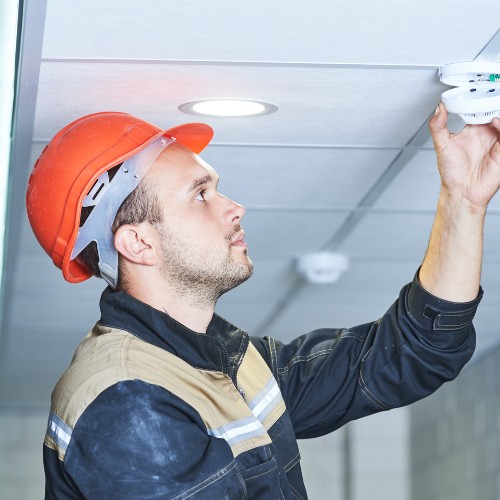
Commercial smoke detectors
Fire Check
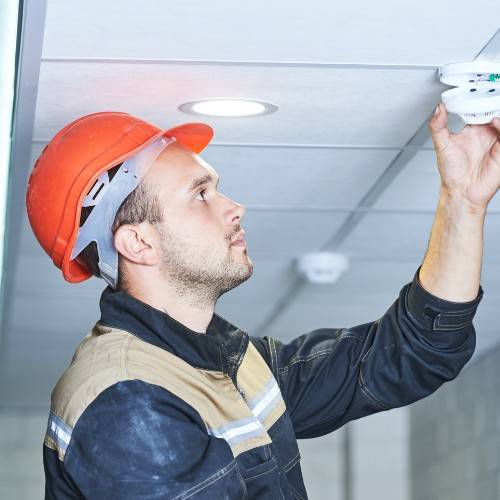
Commercial smoke detectors
An integrated locking mechanism for commercial building doors. Inside an enclosure are a locking device, smoke detector and power supply.
Commercial smoke detectors are either conventional or analog addressable, and are wired up to security monitoring systems or fire alarm control panels (FACP). These are the most common type of detector, and usually cost a lot more than a household smoke alarms. They exist in most commercial and industrial facilities, such as high rises, ships and trains. These detectors don't need to have built in alarms, as alarm systems can be controlled by the connected FACP, which will set off relevant alarms, and can also implement complex functions such as a staged evacuation.
Fire Awareness Course
Fire Check
Fire Awareness Course
Fire Awareness Course |
|||||
|
Course Title |
Use of Fire Equipment |
Unit Standard ID |
- |
Credits |
- |
|
Duration |
½ Day |
NQF Level |
- |
||
|
COURSE CONTENTS/OUTCOMES |
|||||
|
Fire introduction The burning process • Procedure in case of a fire • The fire triangle • Extinguishing methods |
• Classes of fire • Getting out alive • Different extinguishing mediums • How to operate an extinguisher • Practical use of a fire extinguisher |
||||
Carbon monoxide and carbon dioxide detection
Fire Check
Carbon monoxide and carbon dioxide detection
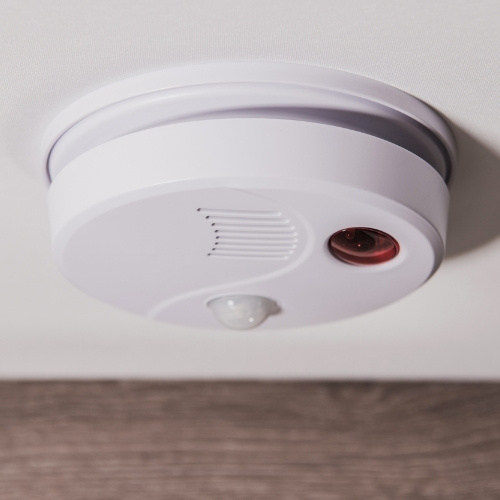
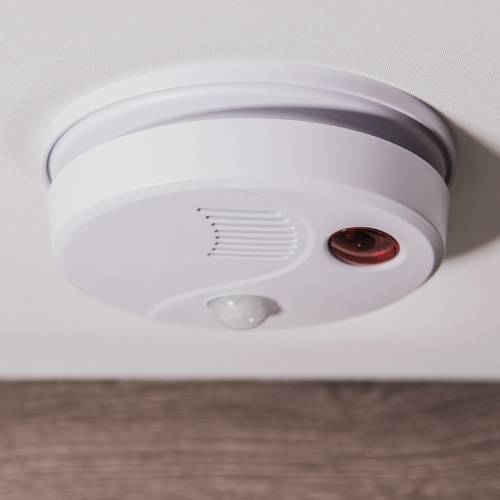
Some smoke alarms use a carbon dioxide sensor or carbon monoxide sensor in order to detect extremely dangerous products of combustion. However, not all smoke detectors that are advertised with such gas sensors are actually able to warn of poisonous levels of those gases in the absence of a fire.
Basic Fire Fighting Course
Fire Check
Basic Fire Fighting Course
Basic Fire Fighting Course |
|||||
|
Course Title |
Use of Fire Fighting Equipment and Hoses |
Unit Standard ID |
110075 |
Credits |
3 |
|
Duration |
1 Day |
NQF Level |
1 |
||
|
COURSE CONTENTS/OUTCOMES |
|||||
|
Fire introduction The burning process • Procedure in case of a fire • The fire triangle • Extinguishing methods • Classes of fire • Getting out alive • Different extinguishing mediums • How to operate an extinguisher • Practical use of a fire extinguisher |
• Fire Safety – Housekeeping • Fire prevention • Company policies and procedures – safety • The spread of fire • Containment of Fire • Practical use of Hose reels • Hydrant and hose drills • Fire blanket and buckets |
||||
Air-sampling
Fire Check
Air-sampling
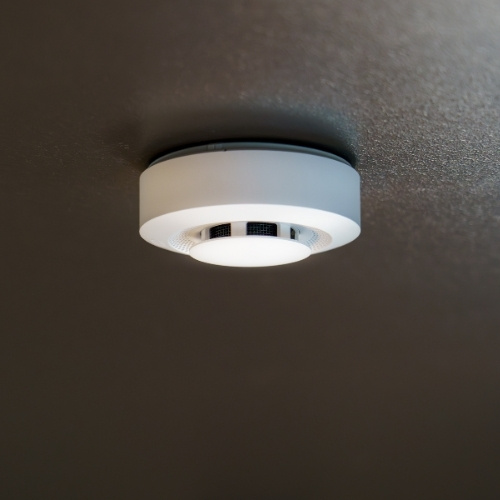
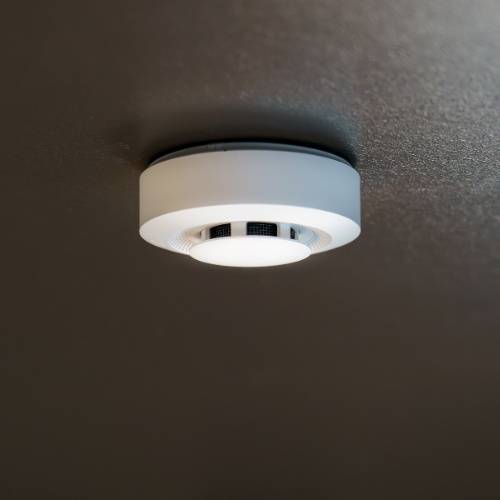
An air-sampling smoke detector is capable of detecting microscopic particles of smoke. Most air-sampling detectors are aspirating smoke detectors, which work by actively drawing air through a network of small-bore pipes laid out above or below a ceiling in parallel runs covering a protected area. Small holes drilled into each pipe form a matrix of holes (sampling points), providing an even distribution across the pipe network. Air samples are drawn past a sensitive optical device, often a solid-state laser, tuned to detect the extremely small particles of combustion. Air-sampling detectors may be used to trigger an automatic fire response, such as a gaseous fire suppression system, in high-value or mission-critical areas, such as archives or computer server rooms.
Most air-sampling smoke detection systems are capable of a higher sensitivity than spot type smoke detectors and provide multiple levels of alarm threshold, such as Alert, Action, Fire 1 and Fire 2. Thresholds may be set at levels across a wide range of smoke levels. This provides earlier notification of a developing fire than spot type smoke detection, allowing manual intervention or activation of automatic suppression systems before a fire has developed beyond the smoldering stage, thereby increasing the time available for evacuation and minimizing fire damage.
Advanced Fire Fighting Course
Fire Check
Advanced Fire Fighting Course
Advanced Fire Fighting Course |
|||||
|
Course Title |
Advanced Fire Fighting |
Unit Standard ID |
13961 |
Credits |
4 |
|
Duration |
2 Days |
NQF Level |
2 |
||
|
COURSE CONTENTS/OUTCOMES |
|||||
|
Fire introduction The burning process
|
|
||||
Breathing Apparatus Course
Fire Check
Breathing Apparatus Course
Breathing Apparatus Course |
|||||
|
Course Title |
Breathing Apparatus |
Unit Standard ID |
- |
Credits |
- |
|
Duration |
1 Day |
NQF Level |
- |
||
|
COURSE CONTENTS/OUTCOMES |
|||||
|
|
||||
Ionization
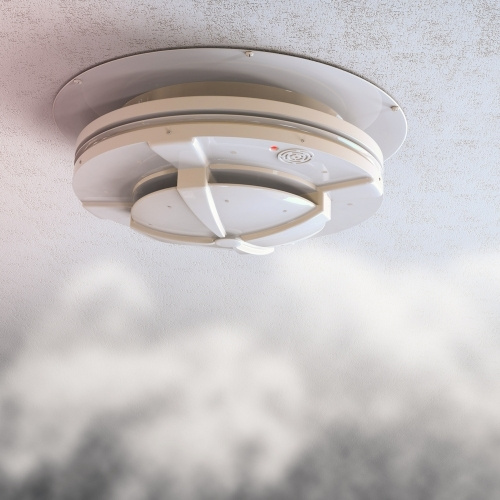
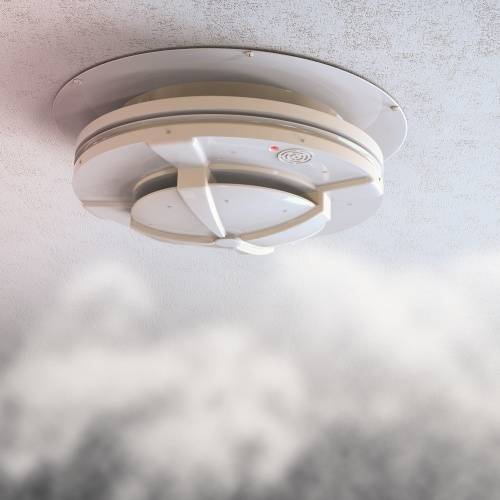
This type of detector is cheaper than the optical detector; however, it is sometimes rejected because it is more prone to false (nuisance) alarms than photoelectric smoke detectors. It can detect particles of smoke that are too small to be visible. It includes about 37 kBq or 1 µCi of radioactive americium-241 (241Am), corresponding to about 0.3 µg of the isotope. The radiation passes through an ionization chamber, an air-filled space between two electrodes, and permits a small, constant current between the electrodes. Any smoke that enters the chamber absorbs the alpha particles, which reduces the ionization and interrupts this current, setting off the alarm.
241Am, an alpha emitter, has a half-life of 432 years. This means that it does not have to be replaced during the useful life of the detector, and also makes it safe for people at home, since it is only slightly radioactive. Alpha radiation, as opposed to beta and gamma, is used for two additional reasons: Alpha particles have high ionization, so sufficient air particles will be ionized for the current to exist, and they have low penetrative power, meaning they will be stopped by the plastic of the smoke detector and/or the air. About one percent of the emitted radioactive energy of 241Am is gamma radiation.
Safe Use and Handling of Chlorine
Fire Check
Safe Use and Handling of Chlorine
Safe Use and Handling of Chlorine |
|||||
|
Course Title |
Safe use and handling of Chlorine |
Unit Standard ID |
- |
Credits |
- |
|
Duration |
½ Day |
NQF Level |
- |
||
|
COURSE CONTENTS/OUTCOMES |
|||||
|
|
||||
Design Optical
Fire Check
Design Optical
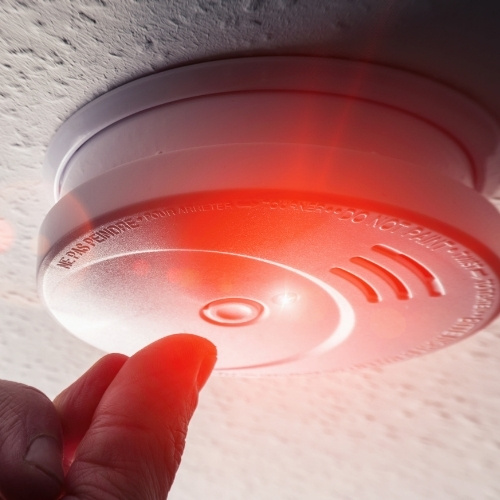
An optical detector is a light sensor. When used as a smoke detector, it includes a light source (incandescent bulb or infrared LED), a lens to collimate the light into a beam, and a photodiode or other photoelectric sensor at an angle to the beam as a light detector. In the absence of smoke, the light passes in front of the detector in a straight line. When smoke enters the optical chamber across the path of the light beam, some light is scattered by the smoke particles, directing it at the sensor and thus triggering the alarm.
Also seen in large rooms, such as a gymnasium or an auditorium, are devices to detect a projected beam. A unit on the wall sends out a beam, which is either received by a receiver or reflected back via a mirror. When the beam is less visible to the "eye" of the sensor, it sends an alarm signal to the fire alarm control panel.
Optical smoke detectors are quick in detecting particulate (smoke) generated by smoldering (cool, smoky) fires. Many independent tests indicate that optical smoke detectors typically detect particulates (smoke) from hot, flaming fires approximately 30 seconds later than ionization smoke alarms.
They are less sensitive to false alarms from steam or cooking fumes generated in kitchen or steam from the bathroom than are ionization smoke alarms. For the aforementioned reason, they are often referred to as 'toast proof' smoke alarms.
Safe Use and Handling of LP Gas
Fire Check
Safe Use and Handling of LP Gas
Safe Use and Handling of LP Gas |
|||||
|
Course Title |
Safe use and handling of LP Gas |
Unit Standard ID |
- |
Credits |
- |
|
Duration |
½ Day |
NQF Level |
- |
||
|
COURSE CONTENTS/OUTCOMES |
|||||
|
|
||||
Water spray
Fire Check
Water spray
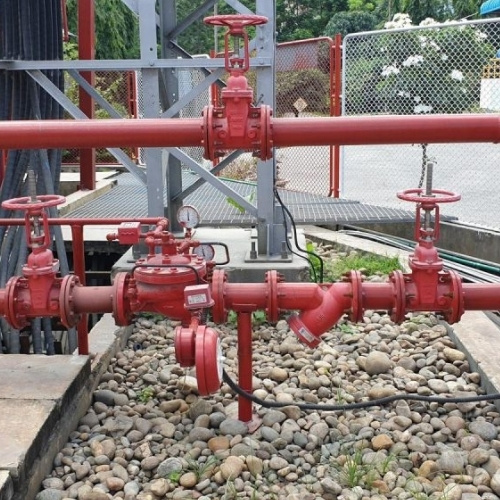
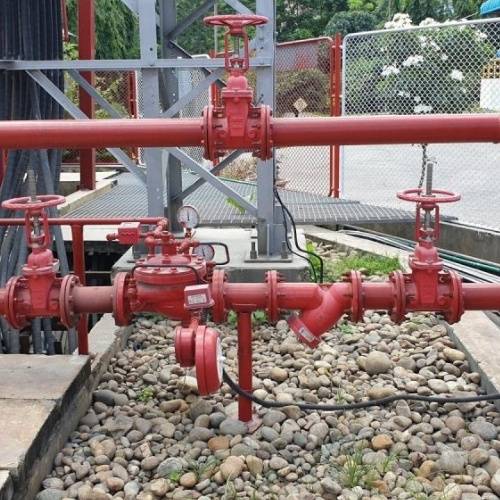
"Water spray" systems are operationally identical to a deluge system, but the piping and discharge nozzle spray patterns are designed to protect a uniquely configured hazard, usually being three dimensional components or equipment (i.e., as opposed to a deluge system, which is designed to cover the horizontal floor area of a room). The nozzles used may not be listed fire sprinklers, and are usually selected for a specific spray pattern to conform to the three dimensional nature of the hazard (e.g., typical spray patterns being oval, fan, full circle, narrow jet). Examples of hazards protected by water spray systems are electrical transformers containing oil for cooling or turbgenerator bearings. Water spray systems can also be used externally on the surfaces of tanks containing flammable liquids or gasses (such as hydrogen). Here the water spray is intended to cool the tank and its contents to prevent tank rupture/explosion (BLEVE) and fire spread.
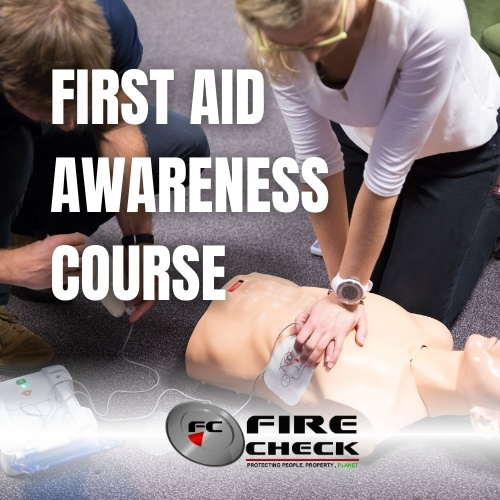
First Aid Awareness Course
Fire Check

First Aid Awareness Course
First Aid Awareness Course |
|||||
|
Course Title |
First Aid Awareness |
Unit Standard ID |
116511 |
Credits |
1 |
|
Duration |
1 Days |
NQF Level |
1 |
||
|
COURSE CONTENTS/OUTCOMES |
|||||
|
|
||||
Foam water sprinkler systems
Fire Check
Foam water sprinkler systems
A foam water fire sprinkler system is a special application system, discharging a mixture of water and low expansion foam concentrate, resulting in a foam spray from the sprinkler. These systems are usually used with special hazards occupancies associated with high challenge fires, such as flammable liquids, and airport hangars. Operation is as described above, depending on the system type into which the foam is injected.
Deluge systems
Fire Check
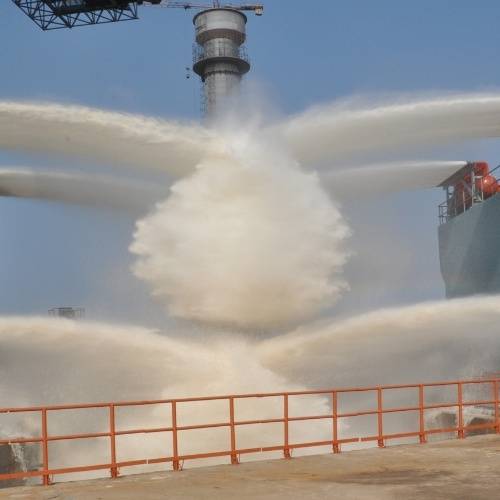
Deluge systems
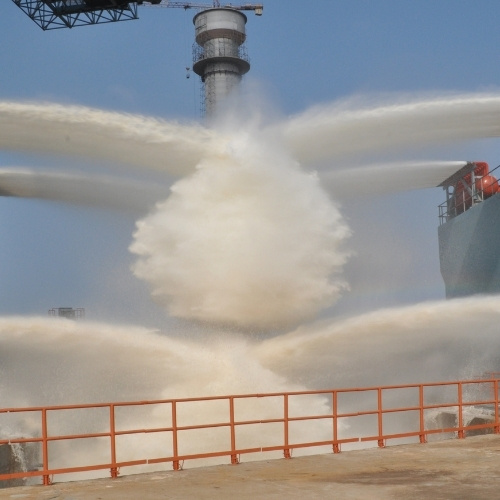
"Deluge" systems are systems in which all sprinklers connected to the water piping system are open, in that the heat sensing operating element is removed, or specifically designed as such. These systems are used for special hazards where rapid fire spread is a concern, as they provide a simultaneous application of water over the entire hazard. They are sometimes installed in personnel egress paths or building openings to slow travel of fire (e.g., openings in a fire-rated wall).
Water is not present in the piping until the system operates. Because the sprinkler orifices are open, the piping is at atmospheric pressure. To prevent the water supply pressure from forcing water into the piping, a deluge valve is used in the water supply connection, which is a mechanically latched valve. It is a non-resetting valve, and stays open once tripped.
Because the heat sensing elements present in the automatic sprinklers have been removed (resulting in open sprinklers), the deluge valve must be opened as signaled by a fire alarm system. The type of fire alarm initiating device is selected mainly based on the hazard (e.g., smoke detectors, heat detectors, or optical flame detectors). The initiation device signals the fire alarm panel, which in turn signals the deluge valve to open. Activation can also be manual, depending on the system goals. Manual activation is usually via an electric or pneumatic fire alarm pull station, which signals the fire alarm panel, which in turn signals the deluge valve to open.
Operation - Activation of a fire alarm initiating device, or a manual pull station, signals the fire alarm panel, which in turn signals the deluge valve to open, allowing water to enter the piping system. Water flows from all sprinklers simultaneously.
First Aid Level 1
Fire Check
First Aid Level 1
First Aid Level 1 |
|||||
|
Course Title |
First Aid Level 1 |
Unit Standard ID |
116534 |
Credits |
2 |
|
Duration |
2 ½ Days |
NQF Level |
3 |
||
|
COURSE CONTENTS/OUTCOMES |
|||||
|
|
||||
Wet pipe systems
Fire Check
Wet pipe systems
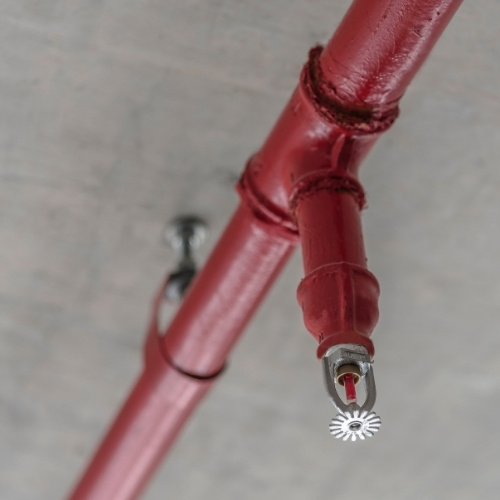
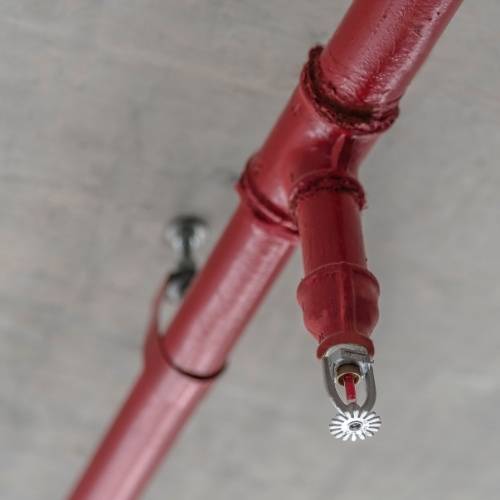
By a wide margin, wet pipe sprinkler systems are installed more often than all other types of fire sprinkler systems. They also are the most reliable, because they are simple, with the only operating components being the automatic sprinklers and (commonly, but not always) the automatic alarm check valve. An automatic water supply provides water under pressure to the system piping.
Operation - When an automatic sprinkler is exposed for a sufficient time to a temperature at or above the temperature rating, the heat sensitive element (glass bulb or fusible link) releases, allowing water to flow from that sprinkler.
First Aid Level 2
Fire Check

First Aid Level 2
First Aid Level 2 |
|||||
|
Course Title |
First Aid Level 2 |
Unit Standard ID |
116534 |
Credits |
4 |
|
Duration |
4 Days |
NQF Level |
2 |
||
|
COURSE CONTENTS/OUTCOMES |
|||||
|
|
||||
First Aid Level 3
Fire Check

First Aid Level 3
First Aid Level 3 |
|||||
|
Course Title |
First Aid Level 3 |
Unit Standard ID |
119567 |
Credits |
5 |
|
Duration |
5 Days |
NQF Level |
1 |
||
|
COURSE CONTENTS/OUTCOMES |
|||||
|
|
||||
Safety Induction Course
Fire Check
Safety Induction Course
Safety Induction Course |
|||||
|
Course Title |
Safety Induction |
Unit Standard ID |
- |
Credits |
- |
|
Duration |
½ Day |
NQF Level |
- |
||
|
COURSE CONTENTS/OUTCOMES |
|||||
|
|
||||
General Health and Safety
Fire Check
General Health and Safety
General Health and Safety |
|||||
|
Course Title |
General Health and Safety |
Unit Standard ID |
116520 |
Credits |
2 |
|
Duration |
1 Day |
NQF Level |
2 |
||
|
COURSE CONTENTS/OUTCOMES |
|||||
|
|
||||
SHE Representative Course
Fire Check
SHE Representative Course
SHE Representative Course |
|||||
|
Course Title |
She Representative |
Unit Standard ID |
116518 |
Credits |
2 |
|
Duration |
1 Day |
NQF Level |
2 |
||
|
COURSE CONTENTS/OUTCOMES |
|||||
- Legislation pertaining to health and safety representatives, - Effect on the duties of the health and safety representatives of health and safety legislation
|
|||||

Emergency and Evacuation Training
Fire Check

Emergency and Evacuation Training
Emergency and Evacuation Training |
|||||
|
Course Title |
SHE Emergencies in the workplace |
Unit Standard ID |
116533 |
Credits |
2 |
|
Duration |
1 Day |
NQF Level |
2 |
||
|
COURSE CONTENTS/OUTCOMES |
|||||
|
|
||||
Standalone smoke alarms
Fire Check
Standalone smoke alarms
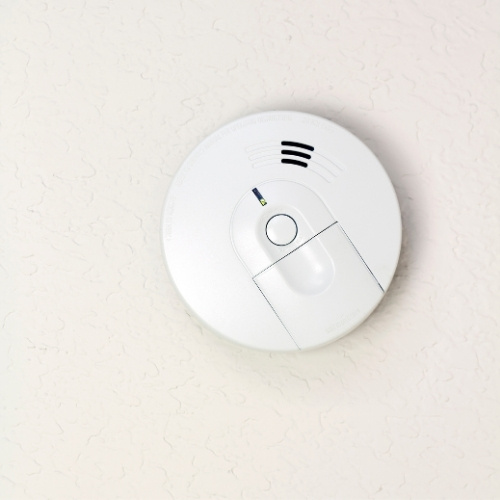
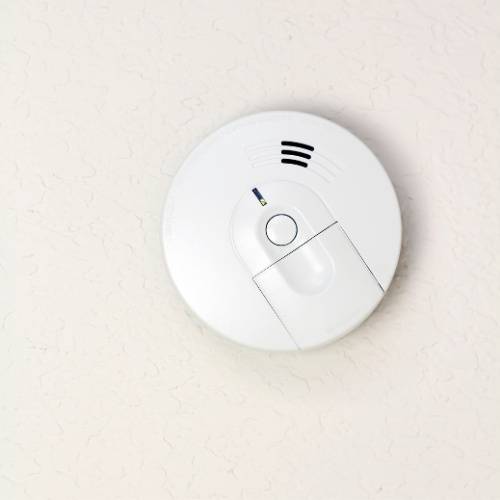
The main function of a standalone smoke alarm is to alert persons at risk. Several methods are used and documented in industry specifications published by Underwriters Laboratories[14] Alerting methods include:
- Audible tones usually around 3200 Hz due to component constraints (Audio advancements for persons with hearing impairments have been made; see External links)
- 85 dBA at 10 feet
- Spoken voice alert
- Visual strobe lights
- 110 candela output
- Tactile stimulation, e.g., bed or pillow shaker (No standards exist as of 2008 for tactile stimulation alarm devices.)
Some models have a hush or temporary silence feature that allows silencing without removing the battery. This is especially useful in locations where false alarms can be relatively common (i.e. due to "toast burning") or users could remove the battery permanently to avoid the annoyance of false alarms, but removing the battery permanently is strongly discouraged.
While current technology is very effective at detecting smoke and fire conditions, the deaf and hard of hearing community has raised concerns about the effectiveness of the alerting function in awakening sleeping individuals in certain high risk groups such as the elderly, those with hearing loss and those who are intoxicated.[15] Between 2005 and 2007, research sponsored by the United States' National Fire Protection Association (NFPA) has focused on understanding the cause of a higher number of deaths seen in such high risk groups. Initial research into the effectiveness of the various alerting methods is sparse. Research findings suggest that a low frequency (520 Hz) square wave output is significantly more effective at awakening high risk individuals. Wireless Wi-Safe smoke and carbon monoxide detectors linked to alert mechanisms such as vibrating pillow pads, strobes and remote warning handsets have been found to support the groups above.
Pre-Action Systems
Fire Check
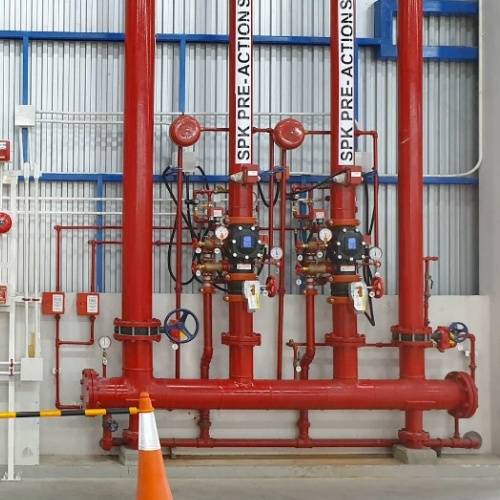
Pre-Action Systems
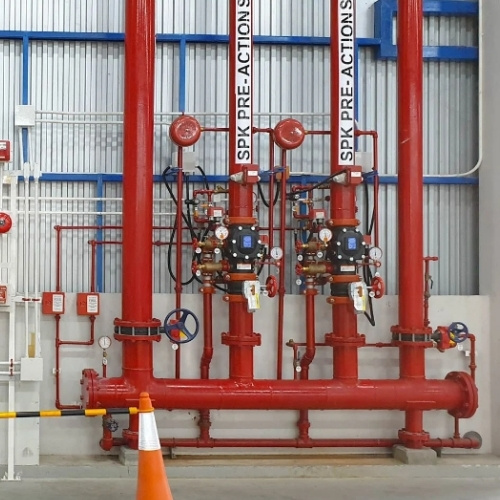
Pre-action sprinkler systems are specialized for use in locations where accidental activation is undesired, such as in museums with rare art works, manuscripts, or books; and Data Centers, for protection of computer equipment from accidental water discharge.
Pre-action systems are hybrids of wet, dry, and deluge systems, depending on the exact system goal. There are two main sub-types of pre-action systems: single interlock, and double interlock.
The operation of single interlock systems are similar to dry systems except that these systems require that a “preceding” fire detection event, typically the activation of a heat or smoke detector, takes place prior to the “action” of water introduction into the system’s piping by opening the pre-action valve, which is a mechanically latched valve (i.e., similar to a deluge valve). In this way, the system is essentially converted from a dry system into a wet system. The intent is to reduce the undesirable time delay of water delivery to sprinklers that is inherent in dry systems. Prior to fire detection, if the sprinkler operates, or the piping system develops a leak, loss of air pressure in the piping will activate a trouble alarm. In this case, the pre-action valve will not open due to loss of supervisory pressure, and water will not enter the piping.
The operation of double interlock systems are similar to deluge systems except that automatic sprinklers are used. These systems require that both a “preceding” fire detection event, typically the activation of a heat or smoke detector, and an automatic sprinkler operation take place prior to the “action” of water introduction into the system’s piping. Activation of either the fire detectors alone, or sprinklers alone, without the concurrent operation of the other, will not allow water to enter the piping. Because water does not enter the piping until a sprinkler operates, double interlock systems are considered as dry systems in terms of water delivery times, and similarly require a larger design area.