
Sprinklers And Deluge Systems
Fire Check
Sprinklers And Deluge Systems
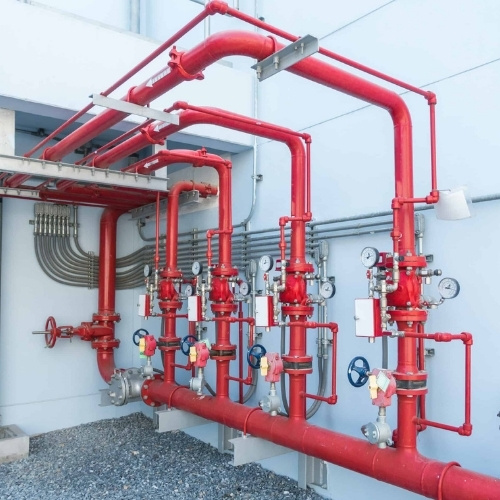
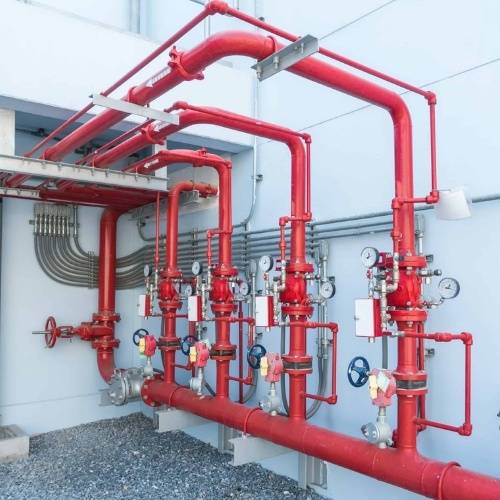
Sprinklers may be required to be installed by building codes, or may be recommended by insurance companies to reduce potential property losses or business interruption. Building codes in the United States for places of assembly, generally over 100 persons, and places with overnight sleeping accommodation such as hotels, nursing homes, dormitories, and hospitals usually require sprinklers either under local building codes, as a condition of receiving State and Federal funding or as a requirement to obtain certification (essential for institutions who wish to train medical staff.
Operation
Each closed-head sprinkler is held closed by either a heat-sensitive glass bulb or a two-part metal link held together with fusible alloy. The glass bulb or link applies pressure to a pip cap which acts as a plug which prevents water from flowing until the ambient temperature around the sprinkler reaches the design activation temperature of the individual sprinkler head. In a standard wet-pipe sprinkler system, each sprinkler activates independently when the predetermined heat level is reached. Because of this, the number of sprinklers that operate is limited to only those near the fire, thereby maximizing the available water pressure over the point of fire origin.
A sprinkler activation will do less damage than a fire department hose stream, which provide approximately 900 liters/min (250 US gallons/min). A typical sprinkler used for industrial manufacturing occupancies discharge about 75-150 litres/min (20-40 US gallons/min). However, a typical Early Suppression Fast Response (ESFR) sprinkler at a pressure of 50 psi (340 kPa) will discharge approximately 100 US gallons per minute (0.0063 m3/s). In addition, a sprinkler will usually activate between one and four minutes, whereas the fire department typically takes at least five minutes to arrive at the fire site after receiving an alarm, and an additional ten minutes to set up equipment and apply hose streams to the fire. This additional time can result in a much larger fire, requiring much more water to achieve extinguishment. Design intent Sprinkler systems are intended to either control the fire or to suppress the fire. Control mode sprinklers are intended to control the heat release rate of the fire to prevent building structure collapse, and pre-wet the surrounding combustibles to prevent fire spread. The fire is not extinguished until the burning combustibles are exhausted or manual extinguishment is effected by firefighters. Suppression mode sprinklers (formerly known as Early Suppression Fast Response (ESFR) sprinklers) are intended to result in a severe sudden reduction of the heat release rate of the fire, followed quickly by complete extinguishment, prior to manual intervention.
Fire Equipment And Safety
Fire Check
Fire Equipment And Safety
1. PURPOSE
The purpose of this Standard is to ensure
1.1. This standard sets out the company’s minimum requirements in terms of Personal Protective Equipment (PPE)
1.2. This standard is not exhaustive and operations may identify site specific PPE requirements through risk assessments and the use of a PPE need matrix.
2. SCOPE
This Standard applies to all Tongaat Hulett Operations.
3. REFERENCES
Occupational Health and Safety Act 85/1993
• General Safety Regulations – Regulation 2(3), 3(9)
• Driven Machine Regulations – regulation 20(3) (a), 8(6)
• Section 38 (1) (n) & (o)
• General Safety Regulations 2, 9 (General Health & Safety Regulation 2 & 9)
• General Safety Regulations – Regulation 2 (3) (a)
• Environmental Regulations – Regulation 2 (2) (b)
• Asbestos Regulations
SANS 809- 1984 – Industrial Safety Harnesses
SANS 1280 – Specification for Industrial Safety Belt Webbing
SANS 0400
SANS 0041 – Code of Practice for Noxious Dusts & Fumes
SANS 434, 1068 AND 136 – Protective Clothing
SANS 492 – Standard Specifications for Symbolic Safety Signs
SANS 083 – 1993. Measurement and assessment of occupational noise for hearing conservation purposes.
SANS 1451 – Part 1 & 2 - Standard Specification for Hearing Protectors, Ear Muffs & Plugs and / or applicable legislation for operations outside South Africa.
Personal protective equipment (PPE) refers to protective clothing, helmets, goggles, or other gear designed to protect the wearer's body or clothing from injury by electrical hazards, heat, chemicals, and infection, for job-related occupational safety and health purposes.
Assessing suitable PPE
- To allow the right type of PPE to be chosen, carefully consider the different hazards in the workplace. This will enable you to assess which types of PPE are suitable to protect against the hazard and for the job to be done.
- Ask your supplier for advice on the different types of PPE available and how suitable they are for different tasks. It may be necessary in a few particularly difficult cases to obtain advice from specialist sources and from the PPE manufacturer.
Consider the following when assessing whether PPE is suitable:
- Is it appropriate for the risks involved and the conditions at the place where exposure to the risk may occur? For example, eye protection designed for providing protection against agricultural pesticides will not offer adequate face protection for someone using an angle grinder to cut steel or stone.
- Does it prevent or adequately control the risks involved without increasing the overall level of risk?
- Can it be adjusted to fit the wearer correctly?
- Has the state of health of those who will be wearing it been taken into account?
- What are the needs of the job and the demands it places on the wearer? For example, the length of time the PPE needs to be worn, the physical effort required to do the job and the requirements for visibility and communication.
- If more than one item of PPE is being worn, are they compatible? For example, does a particular type of respirator make it difficult to get eye protection to fit properly.
The hazards and types of PPE:
Eyes
- Hazards: chemical or metal splash, dust, projectiles, gas and vapour, radiation.
- Options: safety spectacles, goggles, faceshields, visors.
Head
- Hazards: impact from falling or flying objects, risk of head bumping, hair entanglement.
- Options: a range of helmets and bump caps.
Breathing
- Hazards: dust, asbestos, vapour, gas, oxygen-deficient atmospheres.
- Options: disposable filtering facepiece or respirator, half- or full-face respirators, air-fed helmets, breathing apparatus.
- Protecting the body with safety protective wear
- Hazards: temperature extremes, adverse weather, chemical or metal splash, spray from pressure leaks or spray guns, impact or penetration, contaminated dust, excessive wear or entanglement of own clothing. Options: conventional or disposable overalls, boiler suits, specialist protective clothing, e.g. chain-mail aprons, high-visibility clothing.
Hands and arms
Hazards: abrasion, temperature extremes, cuts and punctures, impact, chemicals, electric shock, skin infection, disease or contamination.
Options: gloves, gauntlets, mitts, wristcuffs, armlets.
Feet and legs - safety wear
Hazards: wet, electrostatic build-up, slipping, cuts and punctures, falling objects, metal and chemical splash, abrasion.
Options: safety boots and shoes with protective toe caps and penetration-resistant mid-sole, gaiters, leggings, spats.

Integrated Security Systems
Fire Check

Integrated Security Systems
Closed-circuit television (CCTV) is the use of video cameras to transmit a signal to a specific place, on a limited set of monitors.
It differs from broadcast television in that the signal is not openly transmitted, though it may employ point to point (P2P), point to multipoint, or mesh wireless links. Though almost all video cameras fit this definition, the term is most often applied to those used for surveillance in areas that may need monitoring such as banks, casinos, airports, military installations, and convenience stores. Videotelephony is seldom called "CCTV" but the use of video in distance education, where it is an important tool, is often so called.
In industrial plants, CCTV equipment may be used to observe parts of a process from a central control room, for example when the environment is not suitable for humans. CCTV systems may operate continuously or only as required to monitor a particular event. A more advanced form of CCTV, utilizing Digital Video Recorders (DVRs), provides recording for possibly many years, with a variety of quality and performance options and extra features (such as motion-detection and email alerts). More recently, decentralized IP-based CCTV cameras, some equipped with megapixel sensors, support recording directly to network-attached storage devices, or internal flash for completely stand-alone operation.
Access control refers to exerting control over who can interact with a resource. Often but not always, this involves an authority, who does the controlling. The resource can be a given building, group of buildings, or computer-based information system. But it can also refer to a restroom stall where access is controlled by using a coin to open the door.
Access control is, in reality, an everyday phenomenon. A lock on a car door is essentially a form of access control. A PIN on an ATM system at a bank is another means of access control. The possession of access control is of prime importance when persons seek to secure important, confidential, or sensitive information and equipment.
Physical access control is a matter of who, where, and when. An access control system determines who is allowed to enter or exit, where they are allowed to exit or enter, and when they are allowed to enter or exit. Historically this was partially accomplished through keys and locks. When a door is locked only someone with a key can enter through the door depending on how the lock is configured. Mechanical locks and keys do not allow restriction of the key holder to specific times or dates. Mechanical locks and keys do not provide records of the key used on any specific door and the keys can be easily copied or transferred to an unauthorized person. When a mechanical key is lost or the key holder is no longer authorized to use the protected area, the locks must be re-keyed.
Electronic access control uses computers to solve the limitations of mechanical locks and keys. A wide range of credentials can be used to replace mechanical keys. The electronic access control system grants access based on the credential presented. When access is granted, the door is unlocked for a predetermined time and the transaction is recorded. When access is refused, the door remains locked and the attempted access is recorded. The system will also monitor the door and alarm if the door is forced open or held open too long after being unlocked.
Automatic Foam Systems
Fire Check
Automatic Foam Systems
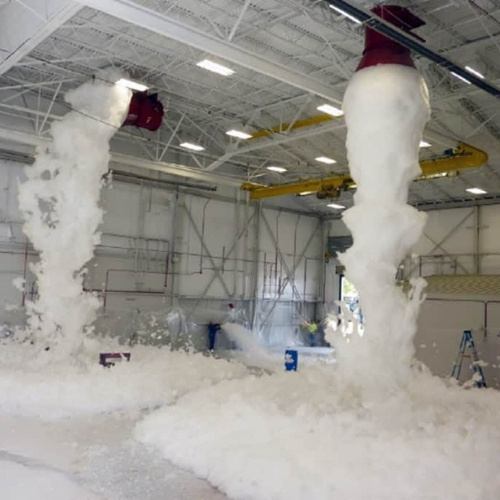
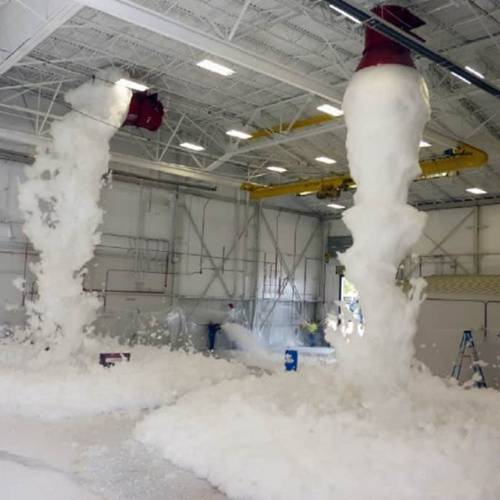
Foam systems protect virtually any hazard where flammable liquids are present. These hazards are common to a multitude of industries including Petrochemical, Chemical, Oil and Gas, Aviation, Marine/Offshore, Manufacturing, Utilities,
- Military, and Transportation.
- Flammable Liquid Storage
- Loading Racks
- Processing Areas
- Refineries
- Dike Areas
- Aircraft Hangars
- Heliports
- Jet Engine Test Facilities
- LNG Storage/Manufacturing
- Marine Applications
- Warehouses
How Foam Systems Work
Fire fighting foam systems suppress fire by separating the fuel from the air (oxygen). Depending on the type of foam system, this is done in several ways:
The following represents operation of a typical foam-water sprinkler system.
Although many other types of systems are available; a basic foam system will always require foam agent storage, proportioning equipment, one or more discharge devices, and a manual and/or automatic means of detecting the fire and actuating the system.
Fire breaks out in the rack storage area of a flammable liquid warehouse.
Rising heat from the fire ruptures the quartzoid bulb(s) in the sprinkler head(s) which starts the flow of water.
Flowing water opens the alarm check valve which allows water to open the hydraulic foam concentrate valve and operate the water-motor gong.
Foam concentrate flows from the bladder tank into the proportioner where it is mixed with the flowing water at the designed foam solution percentage.
Foam is generated as the foam solution discharges through the sprinkler head(s) onto the fire.
Accident/Incident Investigation
Fire Check
Accident/Incident Investigation
Accident/Incident Investigation |
|||||
|
Course Title |
Accident/Incident Investigation |
Unit Standard ID |
115087 |
Credits |
3 |
|
Duration |
1 Day |
NQF Level |
2 |
||
|
COURSE CONTENTS/OUTCOMES |
|||||
|
|||||

Gas Suppression
Fire Check
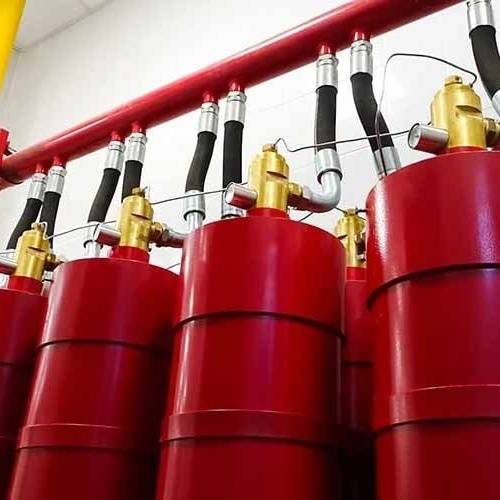
Gas Suppression
Gaseous fire suppression is a term to describe the use of inert gases and chemical agents to extinguish a fire . Also called Clean Agent Fire Suppression. These Agents are governed by the NFPA Standard for Clean Agent Fire Extinguishing Systems - NFPA 2001. The system typically consists of the agent, agent storage containers, agent release valves, fire detectors , fire detection system (wiring control panel, actuation signaling), agent delivery piping, and agent dispersion nozzles. Less typically, the agent may be delivered by means of solid propellant gas generators that produce either inert or chemically active gas.
There are four means used by the agents to extinguish a fire. They act on the "fire tetrahedron":
- Reduction or isolation of fuel
- No agents currently use this as the primary means of fire suppression.
- Reduction of heat
- Representative agents: HFC-227ea (MH227, FM-200), Novec 1230, HFC-125 (ECARO-25) .
- Reduction or isolation of oxygen
- Representative agents: Argonite / IG-55 (ProInert), CO2 carbon dioxide, IG-541 Inergen, and IG-100 (NN100).
- Inhibiting the chain reaction of the above components
- Representative agents: FE-13, FE-227, FE-25, MH227, FM-200, Halons, Halon 1301, Freon 13T1, NAF P-IV, NAF S-III, and Triodide (Trifluoroiodomethane).
Application
Broadly speaking, there are two methods for applying an extinguishing agent: total flooding and local application.
Systems working on a total flooding principle apply an extinguishing agent to a three dimensional enclosed space in order to achieve a concentration of the agent (volume percent of the agent in air) adequate to extinguish the fire. These types of systems may be operated automatically by detection and related controls or manually by the operation of a system actuator.
Systems working on a local application principle apply an extinguishing agent directly onto a fire (usually a two dimensional area), or into the three dimensional region immediately surrounding the substance or object on fire. The main difference in local application from total flooding design is the absence of physical barriers enclosing the fire space.
In the context of automatic extinguishing systems, local application does normally not refer to the use of manually operated wheeled or portable fire extinguishers, although the nature of the agent delivery is similar.
Suffocation
Warning sign for fire supression system.
Systems using certain agents, such as carbon dioxide, in enclosed spaces present a risk of suffocation. Numerous incidents have occurred where individuals in these spaces have been killed by carbon dioxide agent release. To prevent such occurrences, additional life safety systems are typically installed with a warning alarm that precedes the agent release. The warning, usually an audible and visible alert, advises the immediate evacuation of the enclosed space. After a preset time, the agent starts to discharge. Accidents have also occurred during maintenance of these systems, so proper safety precautions must be taken beforehand.
Barotrauma
The positive pressure caused by extinguishant release of the Inert agents in this group (IG-541, IG-55, IG-100) may be sufficient to break windows and walls. Humans and structures must be adequately protected.
Addressable
Fire Check
Addressable
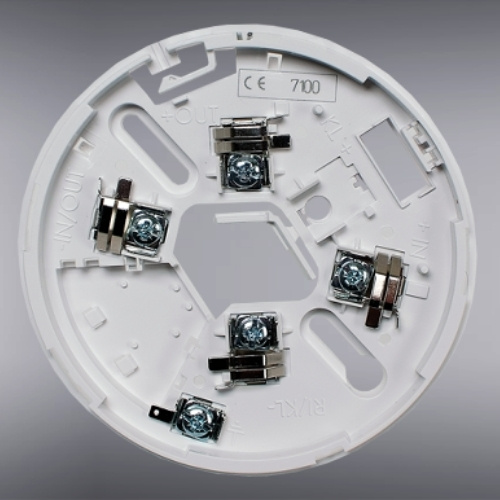
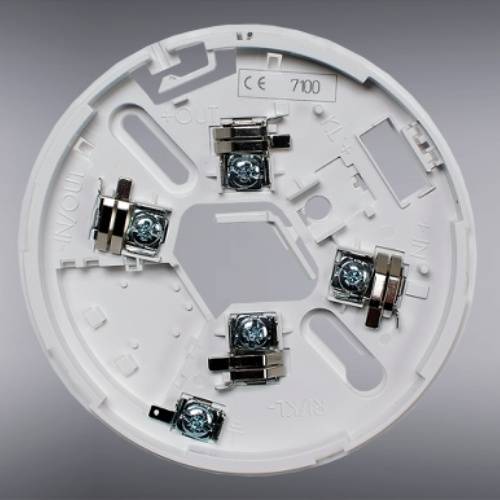
This type of installation gives each detector on a system an individual number, or address. Thus, addressable detectors allow an FACP, and therefore fire fighters, to know the exact location of an alarm where the address is indicated on a diagram.
Analog addressable detectors provide information about the amount of smoke in their detection area, so that the FACP can decide for itself if there is an alarm condition in that area (possibly considering day/night time and the readings of surrounding areas). These are usually more expensive than autonomous deciding detectors.
Pumps And Tanks
Fire Check
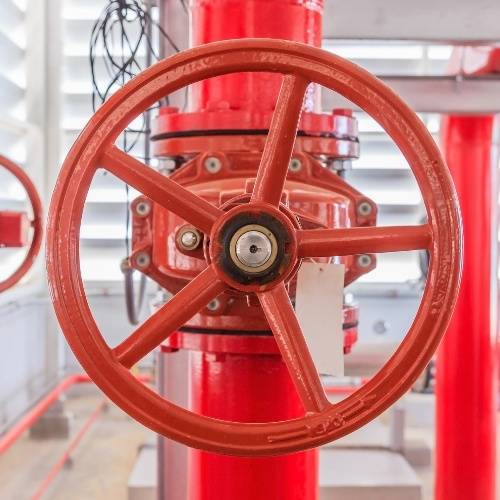
Pumps And Tanks
The BEST features of bolted and field-weld tank construction have been combined together in Tank Connection's RTP bolted tank design:
· Precision RTP (rolled, tapered panel design) is the top rated bolted design for fire protection applications...worldwide
· Standard accessory packages include access ladders/stairways, manways, level controls, heaters, insulation and other customized spec requirements
· Unmatched performance of LIQ Fusion 7000 FBE™ (by Akzo Nobel) interior powder coat system is NSF 61 approved and comes with a standard 5 year limited warranty
· Exclusive performance of EXT Fusion 5000 SDP™ (by Akzo Nobel) exterior, which comes with a standard 3 year limited warranty
· The NO LEAK bolted storage tank
· Long life...low maintenance storage
· Top rated in field installation safety - tank installation crews install tanks at grade level utilizing synchronized, hydraulic screw jack processes
· QA system certified - unmatched product quality
· Manufactured by the recognized experts in tank fabrication with over 1700 years of combined storage tank experience
· Economics of value
· Modular construction - easily shipped worldwide
· RTP tank construction is the ONLY tank design recognized as a replacement for field-weld tank construction
Tank Connection designs, manufactures and installs the top rated bolted tank design available for fire protection applications... worldwide. Designed to meet Factory Mutual and NFPA 22 requirements, the Tank Connection performance package remains unmatched in the industry. GET CONNECTED with the Engineer's 1st choice in fire protection storage tanks!
· Designed for your specific "water reserve" requirements
· Bolted RTP (rolled, tapered panel) tank construction is available from 5000 gallons up to 4 million gallons (15,141.65 cubic meters)
· Outdates API 12B tank construction
· TC also offers Hybrid & Field-Weld tank construction for larger capacity applications
Tank Connection also supplies and installs components for a complete fire protection water storage system. Typical components include the following:
· Vertical Standing Seam Tank Insulation
· Sidewall and roof panels are constructed from 0.025" thick stucco embossed formed aluminum sheets which are laminated to a 2" thick foil-faced polyisocyanurate foam board
· Panels are secured to a series of 1/4" stainless steel cables by stainless steel strapping which attach to the preformed standing seam
· Panels are interlocked and seamed together continuously from bottom to top
· The "R" value for the system is 12.9
· Tank Immersion Heaters
· Designed to be used in conjunction with TC standard tank insulation package
· Maintains 42 degree Fahrenheit water temperature at -10 ambient temperature
· Mounts to tank using 6" 150# flanged nozzle
· Heating element can be replaced without draining the tank
· 1.5 to 25 kW range - sized per application
· 480 Volt / 3 Phase / NEMA 4 rated control box
· Capacitance Probes - High & Low Level Indication
· Ultrasonic Transmitters - Continuous Level Indication
· Automatic Fill Valves
· Temperature Switches
Fire And Smoke Detection
Fire Check
Fire And Smoke Detection
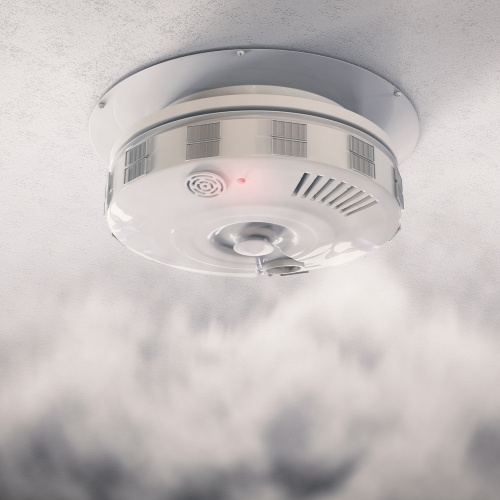
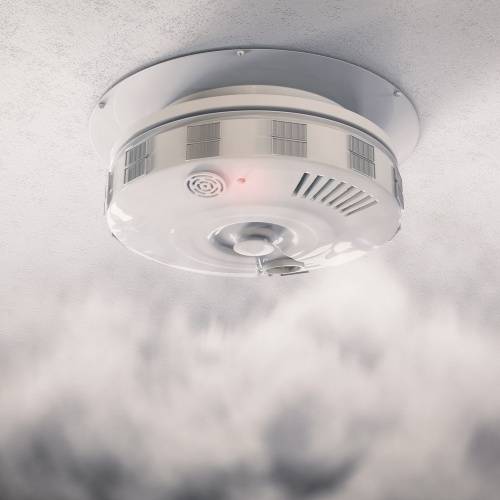
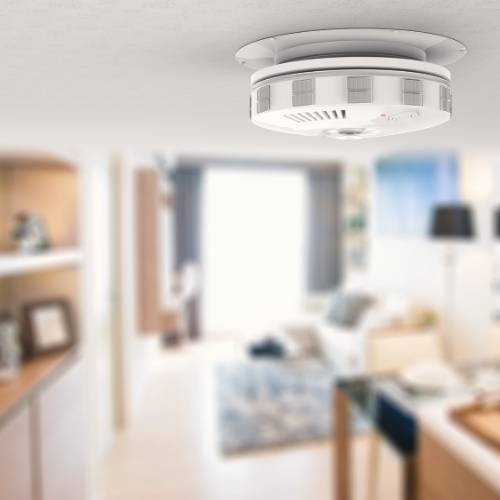
A smoke detector is a device that detects smoke, typically as an indicator of fire. Commercial, industrial, and mass residential devices issue a signal to a fire alarm system, while household detectors, known as smoke alarms, generally issue a local audible and/or visual alarm from the detector itself.
Smoke detectors are typically housed in a disk-shaped plastic enclosure about 150 millimetres (6 in) in diameter and 25 millimetres (1 in) thick, but the shape can vary by manufacturer or product line. Most smoke detectors work either by optical detection (photoelectric) or by physical process (ionization), while others use both detection methods to increase sensitivity to smoke. Sensitive alarms can be used to detect, and thus deter, smoking in areas where it is banned such as toilets and schools. Smoke detectors in large commercial, industrial, and residential buildings are usually powered by a central fire alarm system, which is powered by the building power with a battery backup. However, in many single family detached and smaller multiple family housings, a smoke alarm is often powered only by a single disposable battery.
Conventional
Fire Check
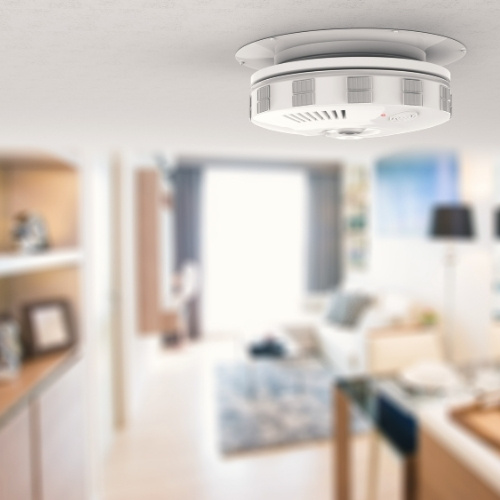
Conventional
The word Conventional is slang used to distinguish the method used to communicate with the control unit from that used by addressable detectors whose methods were unconventional at the time of their introduction. So called “Conventional Detectors” cannot be individually identified by the control unit and resemble an electrical switch in their information capacity. These detectors are connected in parallel to the signaling path or (initiating device circuit) so that the current flow is monitored to indicate a closure of the circuit path by any connected detector when smoke or other similar environmental stimulus sufficiently influences any detector. The resulting increase in current flow is interpreted and processed by the control unit as a confirmation of the presence of smoke and a fire alarm signal is generated.

Fire Alarms
Fire Check
Fire Alarms
Design
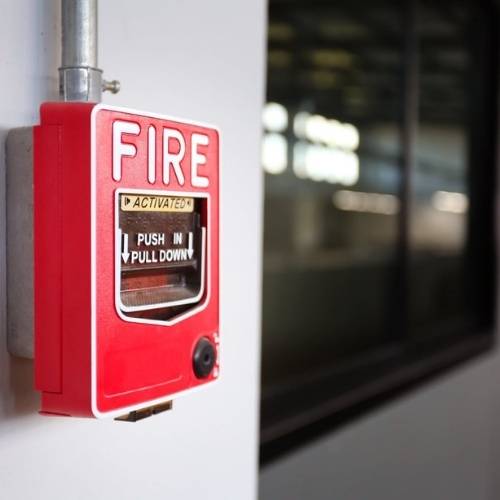
After the fire protection goals are established - usually by referencing the minimum levels of protection mandated by the appropriate model building code, insurance agencies, and other authorities - the fire alarm designer undertakes to detail specific components, arrangements, and interfaces necessary to accomplish these goals. Equipment specifically manufactured for these purposes are selected and standardized installation methods are anticipated during the design. In the United States, NFPA 72, The National Fire Alarm Code is an established and widely used installation standard.
- Fire alarm control panel: This component, the hub of the system, monitors inputs and system integrity, controls outputs and relays information.
-
Primary Power supply: Commonly the non-switched 120 or 240 Volt Alternating Current source supplied from a commercial power utility. In non-residential applications, a branch circuit is dedicated to the fire alarm system and its constituents. "Dedicated branch circuits" should not be confused with "Individual branch circuits" which supply energy to a single appliance.
- Secondary (backup) Power supplies: This component, commonly consisting of sealed lead-acid storage batteries or other emergency sources including generators, is used to supply energy in the event of a primary power failure.
-
Initiating Devices: This component acts as an input to the fire alarm control unit and are either manually or automatically actuated.
- Notification appliances: This component uses energy supplied from the fire alarm system or other stored energy source, to inform the proximate persons of the need to take action, usually to evacuate.
-
Building Safety Interfaces: This interface allows the fire alarm system to control aspects of the built environment and to prepare the building for fire and to control the spread of smoke fumes and fire by influencing air movement, lighting, process control, human transport and exit.
Initiating Devices
Manually actuated devices; Break glass stations, Buttons and manual pull station are constructed to be readily located (near the exits), identified, and operated. Automatically actuated devices can take many forms intended to respond to any number of detectable physical changes associated with fire: convected thermal energy; heat detector, products of combustion; smoke detector, radiant energy; flame detector, combustion gasses; carbon monoxide detector and release of extinguishing agents; water-flow detector. The newest innovations can use cameras and computer algorithms to analyze the visible effects of fire and movement in applications inappropriate for or hostile to other detection methods.
Emergency Evacuation Plans
Fire Check
Emergency Evacuation Plans
Reasons for evacuation
Evacuations may be carried out before, during or after natural disasters such as:
- Eruptions of volcanoes,
- Cyclones
- Floods,
- Hurricanes,
- Earthquakes or
- Tsunamis.
- Other reasons include:
- Military attacks,
- Industrial accidents,
- Nuclear accident
- Traffic accidents, including train or aviation accidents,
- Fire,
- Bombings,
- Terrorist attacks
- Military battles
- Structural failure
- Viral outbreak
Planning
Evacuation sequence
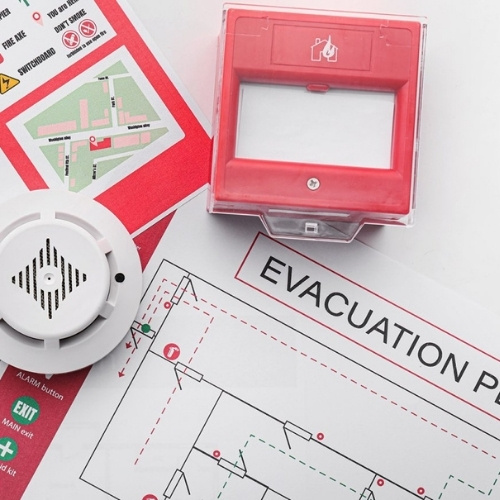
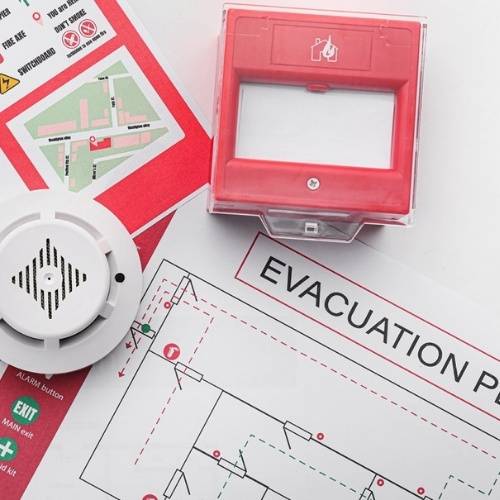
The sequence of an evacuation can be divided into the following phases:
- detection
- decision
- alarm
- reaction
- movement to an area of refuge or an assembly station
- transportation
The time for the first four phases is usually called pre-movement time.The particular phases are different for different objects, e.g., for ships a distinction between assembly and embarkation (to boats or rafts) is made. These are separate from each other. The decision whether to enter the boats or rafts is thus usually made after assembly is completed.
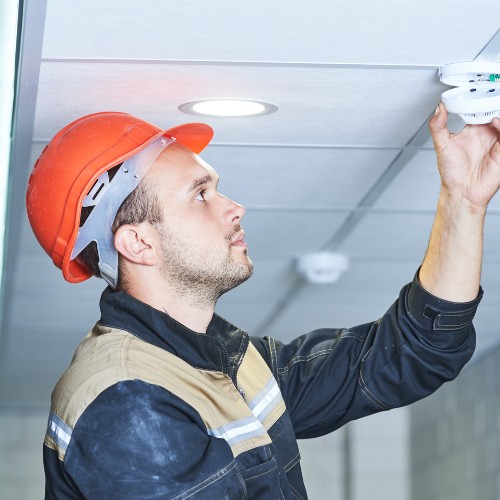
Commercial smoke detectors
Fire Check
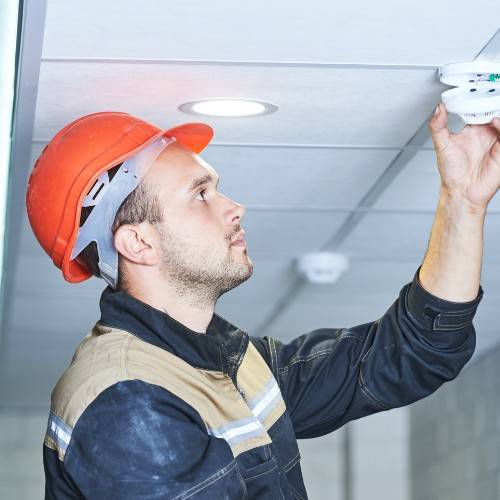
Commercial smoke detectors
An integrated locking mechanism for commercial building doors. Inside an enclosure are a locking device, smoke detector and power supply.
Commercial smoke detectors are either conventional or analog addressable, and are wired up to security monitoring systems or fire alarm control panels (FACP). These are the most common type of detector, and usually cost a lot more than a household smoke alarms. They exist in most commercial and industrial facilities, such as high rises, ships and trains. These detectors don't need to have built in alarms, as alarm systems can be controlled by the connected FACP, which will set off relevant alarms, and can also implement complex functions such as a staged evacuation.
Fire And Safety Training
Fire Check
Fire And Safety Training
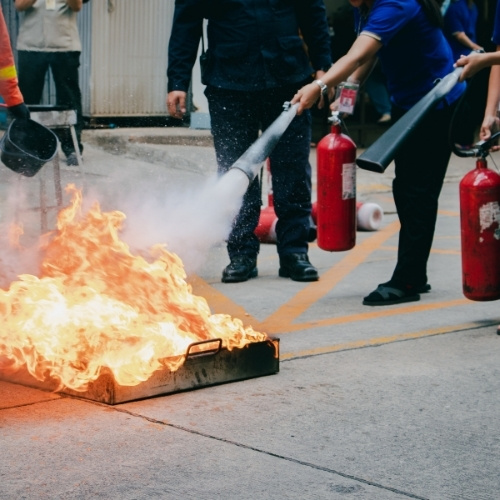
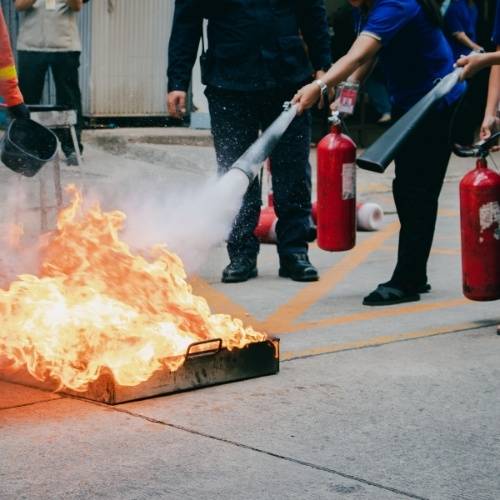
The fire training course covers the following:
-
Half day course
-
Fire Prevention
-
Theory of Fire
-
Practical Fire Fighting
-
Use of Fire Extinguishers
-
Fire Hose Drills
-
Candidates Issued with Certificate on Completion
Advanced Fire Fighter Training Also Available
Who Should Attend?
-
All Employees
-
Fire Team Members
- Fire Awareness Course
- Basic Fire Fighting Course
- Advanced Fire Fighting Course
- Breathing Apparatus Course
- Safe Use and Handling of Chlorine
- Safe Use and Handling of LP Gas
- First Aid Awareness Course
- First Aid Level 1
- First Aid Level 2
- First Aid Level 3
- Safety Induction Course
- General Health and Safety
- SHE Representative Course
- Accident/Incident Investigation
- Emergency and Evacuation Training
Carbon monoxide and carbon dioxide detection
Fire Check
Carbon monoxide and carbon dioxide detection
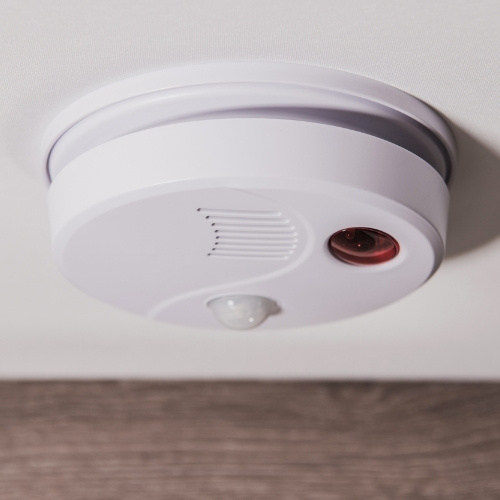
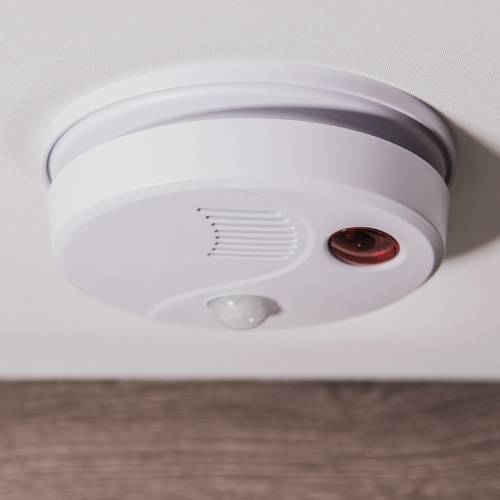
Some smoke alarms use a carbon dioxide sensor or carbon monoxide sensor in order to detect extremely dangerous products of combustion. However, not all smoke detectors that are advertised with such gas sensors are actually able to warn of poisonous levels of those gases in the absence of a fire.
Fire Doors
Fire Check
Fire Doors
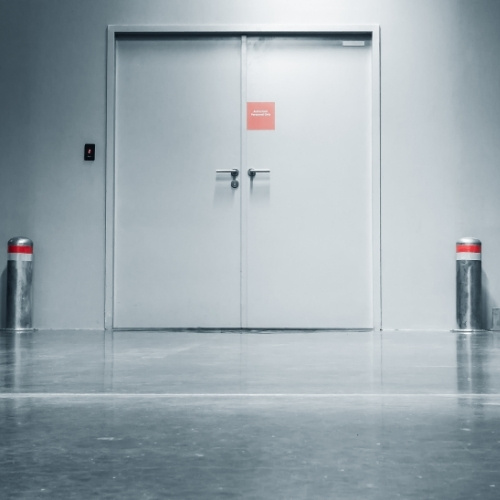
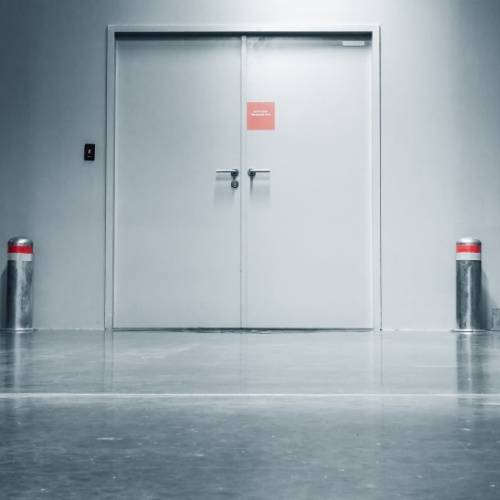
Fire doors may be made of a combination of materials, such as:
- timber
- steel
- gypsum (as an endothermic fill)
- vermiculite-boards
- glass sections
Door hardware includes, but is not limited to:
- Automatic closing devices.
- Ball bearing hinges.
- Positive latching mechanism.
Edges of a fire door usually need to have fire rated seals which can be composed of:
An intumescent strip, which expands when exposed to heat
- Neoprene weatherstripping
- Gaskets to prevent the passage of smoke
Some fire doors are equipped with internal windows which also have a rating, or have been incorporated at the time of the door test and be subject to the overall door's product certification. Fire-resistive windows must remain intact under fire conditions and hose stream impact resistance, and can include:
- Wire mesh glass
- Liquid sodium silicate fills between two window panes
- Ceramic glasses
- Borosilicate glass
Wired glass typically withstands the fire, whereas the sodium silicate liquid also acts to insulate heat transfer, due to the endothermic action of this chemical.
All components are required to adhere to product certification requirements that are acceptable to the local Authority Having Jurisdiction (AHJ) by meeting the requirements of the local building code and fire code. The regulatory requirement will change from country to country.
For example in the United Kingdom a fire resisting doorset should be subjected to either a British Standard Fire Test BS 476 Part 22 1987, or a BS/EN 1634-1 2000 test. The results are recorded by the test agency and provided in a report which detail such things as constructional details, distortion data and pressure readings. The numerical fire resistance rating that is required to be installed in a particular building is provided in the Building Regulations approved Document B, or British Standards such as the BS 5588 series (e.g., 30 minutes FD30, or FD30(S) if cold smoke resistance is also required).
Similar technical guidance documents and building regulations are in effect in other countries.
Fire doors are not necessarily noncombustible. It is acceptable for portions of the door to be destroyed by combustion during exposure to a fire as long as the door assembly meets the fire test criteria of limiting temperature limits on the non-fire side of the assembly. This is in accordance with the overall performance goal of a fire rated door to slow fire propagation from one fire rated compartment to another for only a limited amount of time, during which automatic or manual fire fighting may be employed to limit fire spread, or occupants can exit the building.
Fire doors are sometimes rendered unable to provide its listed fire resistance by ignorance of the intended use and associated restrictions and requirements, or by inappropriate use. For example, fire doors are sometimes blocked open, or carpets are run through them, which would allow the fire to travel past the fire barrier in which the door is placed. The door's certification markings are displayed both on the door leaves and the fire door frames, and should not be removed or painted over during the life of the building.
Sometimes fire doors have apparently very large gaps at the foot of them, an inch or two even, allowing air movement, such as in dormitory facilities. This can lead the occupants of a building to question their status as 'real' fire doors. Testing of fire doors include a maximum door undercut of 3/4 inch. Corridors have a fire rating of one hour or less, and the fire doors in them are required by code to have a fire rating of 1/2 or 1/3 hr, the intent of which is mainly to restrict smoke travel.
Most fire doors are designed to be kept closed at all times. Some doors are designed to stay open under normal circumstances, and close automatically in the event of a fire. Whichever method is used, the door's movement should never be impaired by a doorstop or other obstacle. The intumescent and smoke-seal bounding of fire doors should be routinely checked, as should the action of the door closer and latch.
Fire door held open by magnet
Some fire doors are held open with an electromagnet, which may be wired to a fire alarm system. If the power fails or the fire alarm is activated, the coil is de-energized and the door closes on its own.
Rated fire doors are tested to withstand a fire for a specified period. There are 20, 30, 45, 60 and 90-minute-rated fire doors that are certified by an approved laboratory (e.g. Underwriters Laboratories). The certification only applies if all parts of the installation are correctly specified and installed. For example, fitting the wrong kind of glazing may severely reduce the door's fire resistance period.
As well as ensuring the door is hung properly and squarely, it is also very important that where a fire door is installed, any gaps left in the opening between the wall and the door frame must be properly filled with fire resisting material. Fire doors are normally installed by a carpenter.
Fire Risk Assessment
Fire Check
Fire Risk Assessment
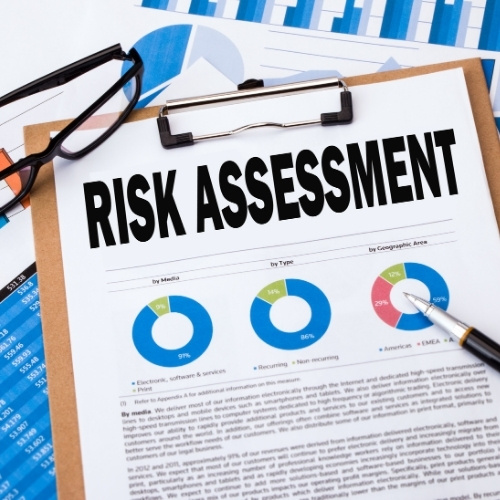
A fire risk assessment is an organised and methodical look at your premises, the activities carried on there and the likelihood that a fire could start and cause harm to those in and around the premises.
The aims of the fire risk assessment are:
* To identify the fire hazards.
* To reduce the risk of those hazards causing harm to as low as reasonably practicable.
* To decide what physical fire precautions and management arrangements are necessary to ensure the safety of people in your building if a fire does start.
If your organisation employs five or more people, or your premises are licensed or an alterations notice requiring it is in force, then the significant findings of the fire risk assessment, the actions to be taken as a result of the assessment and details of anyone especially at risk must be recorded. You will probably find it helpful to keep a record of the significant findings of your fire risk assessment even if you are not required to do so.
How do I carry out a fire risk assessment?
A fire risk assessment will help you determine the chances of a fire starting and the dangers from fire that your premises present for the people who use them and any person in the immediate vicinity.
Much of the information for your fire risk assessment will come from the knowledge your employees, colleagues and representatives have of the premises, as well as information given to you by people who have responsibility for other parts of the building. A tour of your premises will probably be needed to confirm, amend or add detail to your initial views.
It is important that you carry out your fire risk assessment in a practical and systematic way and that you allocate enough time to do a proper job. It must take the whole of your premises into account, including outdoor locations and any rooms and areas that are rarely used. If your premises are small you may be able to assess them as a whole. In larger premises you may find it helpful to divide them into rooms or a series of assessment areas using natural boundaries, e.g. areas such as kitchens or laundries, bedrooms, offices, stores, as well as corridors, stairways and external routes.
Under health and safety law (enforced by the HSE or the local authority) you are required to carry out a risk assessment in respect of any activities in your premises and to take or observe appropriate special, technical or organisational measures. If your health and safety risk assessment identifies that these activities are likely to involve the risk of fire or the spread of fire (for example in the kitchen or in a workshop) then you will need to take this into account during your fire risk assessment under the Order and prioritise actions based on the level of risk.
You need to appoint one or more‚ competent persons‚ (this could be you) to carry out any of the preventive and protective measures needed to comply with the Order. This person could be an appropriately trained employee or, where appropriate, a third party.
Your fire risk assessment should demonstrate that, as far as is reasonable, you have considered the needs of all relevant people, including disabled people.
Step 1 - Identify the hazards within your premises
You need to identify:
* sources of ignition such as naked flames, heaters or some commercial processes;
* sources of fuel such as built-up waste, display materials, textiles or overstocked products; and
* sources of oxygen such as air conditioning or medicinal or commercial oxygen supplies.
Step 2 - Identify people at risk
You will need to identify those people who may be especially at risk such as:
* people working near to fire dangers;
* people working alone or in isolated areas (such as in roof spaces or storerooms);
* children or parents with babies; and the elderly or infirm and people who are disabled.
Step 3 - Evaluate, remove, reduce and protect from risk
Evaluate the level of risk in your premises. You should remove or reduce any fire hazards where possible and reduce any risks you have identified. For example, you should:
* replace highly flammable materials with less flammable ones;
* make sure you separate flammable materials from sources of ignition; and
* have a safe-smoking policy.
When you have reduced the risk as far as possible, you must assess any risk that is left and decide whether there are any further measures you need to take to make sure you provide a reasonable level of fire safety.
Step 4 - Record, plan, instruct, inform and train
In this step you should record, plan, instruct, inform and train. You will need to record the dangers and people you have identified as especially at risk in step 1 and step 2. You should also record what you did about it in step 3. A simple plan can help you achieve this.
You will also need to make an emergency plan, tailored to your premises. It should include the action that you need to take in a fire in your premises or any premises nearby.
You will need to give staff, and occasionally others, such as hotel guests or volunteer stewards, instructions. All employees should receive enough information and training about the risks in the premises. Some, such as fire marshals, will need more thorough training.
Step 5 - Review
You should make sure your fire-risk assessment is up to date. You will need to re-examine your fire-risk assessment if you suspect it is no longer valid, such as after a near miss and every time there is a significant change to the level of risk in your premises. This could include:
* if you store more materials which can catch fire easily;
* a new night shift starting; or
* a change in the type or number of people using your premises.
Fire Awareness Course
Fire Check
Fire Awareness Course
Fire Awareness Course |
|||||
|
Course Title |
Use of Fire Equipment |
Unit Standard ID |
- |
Credits |
- |
|
Duration |
½ Day |
NQF Level |
- |
||
|
COURSE CONTENTS/OUTCOMES |
|||||
|
Fire introduction The burning process • Procedure in case of a fire • The fire triangle • Extinguishing methods |
• Classes of fire • Getting out alive • Different extinguishing mediums • How to operate an extinguisher • Practical use of a fire extinguisher |
||||
Air-sampling
Fire Check
Air-sampling
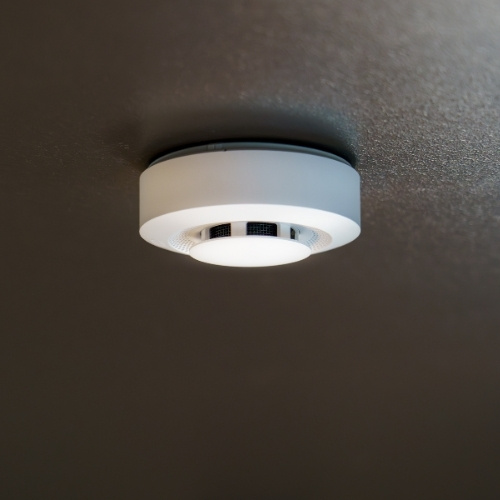
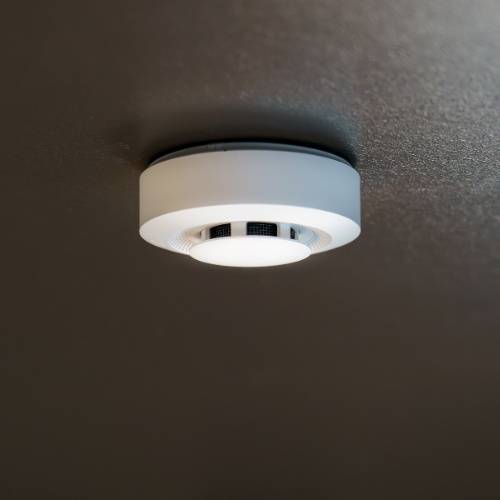
An air-sampling smoke detector is capable of detecting microscopic particles of smoke. Most air-sampling detectors are aspirating smoke detectors, which work by actively drawing air through a network of small-bore pipes laid out above or below a ceiling in parallel runs covering a protected area. Small holes drilled into each pipe form a matrix of holes (sampling points), providing an even distribution across the pipe network. Air samples are drawn past a sensitive optical device, often a solid-state laser, tuned to detect the extremely small particles of combustion. Air-sampling detectors may be used to trigger an automatic fire response, such as a gaseous fire suppression system, in high-value or mission-critical areas, such as archives or computer server rooms.
Most air-sampling smoke detection systems are capable of a higher sensitivity than spot type smoke detectors and provide multiple levels of alarm threshold, such as Alert, Action, Fire 1 and Fire 2. Thresholds may be set at levels across a wide range of smoke levels. This provides earlier notification of a developing fire than spot type smoke detection, allowing manual intervention or activation of automatic suppression systems before a fire has developed beyond the smoldering stage, thereby increasing the time available for evacuation and minimizing fire damage.
Basic Fire Fighting Course
Fire Check
Basic Fire Fighting Course
Basic Fire Fighting Course |
|||||
|
Course Title |
Use of Fire Fighting Equipment and Hoses |
Unit Standard ID |
110075 |
Credits |
3 |
|
Duration |
1 Day |
NQF Level |
1 |
||
|
COURSE CONTENTS/OUTCOMES |
|||||
|
Fire introduction The burning process • Procedure in case of a fire • The fire triangle • Extinguishing methods • Classes of fire • Getting out alive • Different extinguishing mediums • How to operate an extinguisher • Practical use of a fire extinguisher |
• Fire Safety – Housekeeping • Fire prevention • Company policies and procedures – safety • The spread of fire • Containment of Fire • Practical use of Hose reels • Hydrant and hose drills • Fire blanket and buckets |
||||
Ionization
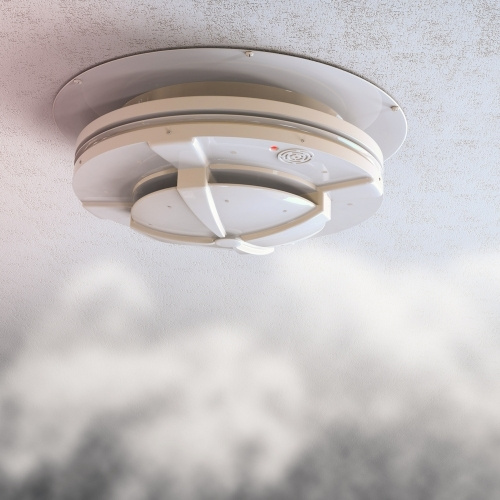
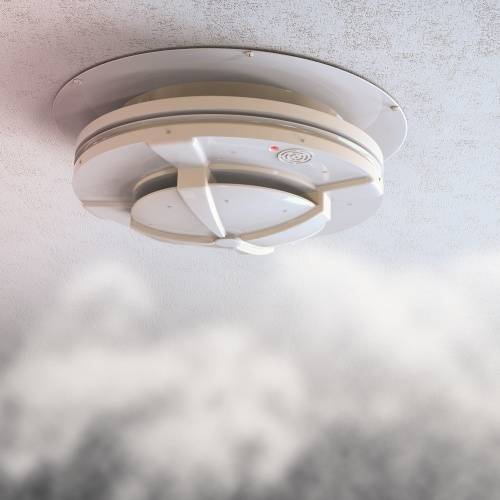
This type of detector is cheaper than the optical detector; however, it is sometimes rejected because it is more prone to false (nuisance) alarms than photoelectric smoke detectors. It can detect particles of smoke that are too small to be visible. It includes about 37 kBq or 1 µCi of radioactive americium-241 (241Am), corresponding to about 0.3 µg of the isotope. The radiation passes through an ionization chamber, an air-filled space between two electrodes, and permits a small, constant current between the electrodes. Any smoke that enters the chamber absorbs the alpha particles, which reduces the ionization and interrupts this current, setting off the alarm.
241Am, an alpha emitter, has a half-life of 432 years. This means that it does not have to be replaced during the useful life of the detector, and also makes it safe for people at home, since it is only slightly radioactive. Alpha radiation, as opposed to beta and gamma, is used for two additional reasons: Alpha particles have high ionization, so sufficient air particles will be ionized for the current to exist, and they have low penetrative power, meaning they will be stopped by the plastic of the smoke detector and/or the air. About one percent of the emitted radioactive energy of 241Am is gamma radiation.
Advanced Fire Fighting Course
Fire Check
Advanced Fire Fighting Course
Advanced Fire Fighting Course |
|||||
|
Course Title |
Advanced Fire Fighting |
Unit Standard ID |
13961 |
Credits |
4 |
|
Duration |
2 Days |
NQF Level |
2 |
||
|
COURSE CONTENTS/OUTCOMES |
|||||
|
Fire introduction The burning process
|
|
||||
Breathing Apparatus Course
Fire Check
Breathing Apparatus Course
Breathing Apparatus Course |
|||||
|
Course Title |
Breathing Apparatus |
Unit Standard ID |
- |
Credits |
- |
|
Duration |
1 Day |
NQF Level |
- |
||
|
COURSE CONTENTS/OUTCOMES |
|||||
|
|
||||
Design Optical
Fire Check
Design Optical
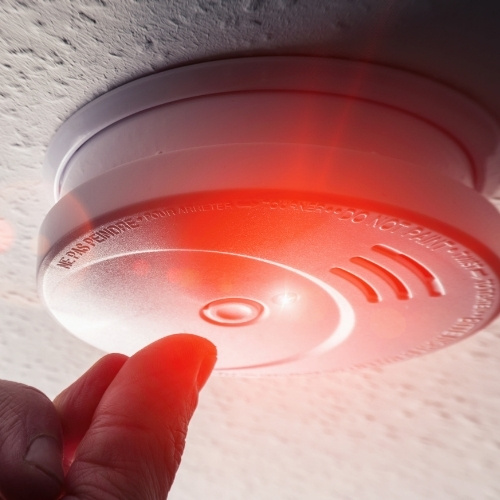
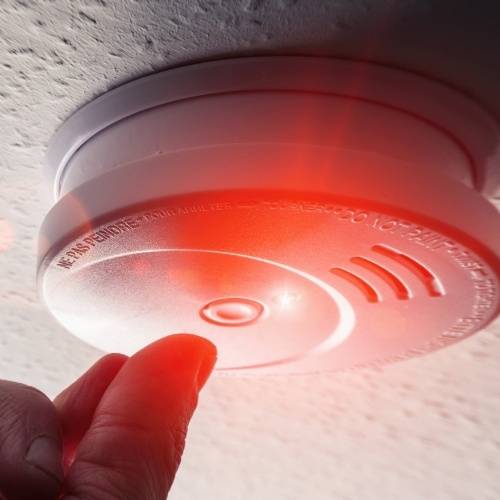
An optical detector is a light sensor. When used as a smoke detector, it includes a light source (incandescent bulb or infrared LED), a lens to collimate the light into a beam, and a photodiode or other photoelectric sensor at an angle to the beam as a light detector. In the absence of smoke, the light passes in front of the detector in a straight line. When smoke enters the optical chamber across the path of the light beam, some light is scattered by the smoke particles, directing it at the sensor and thus triggering the alarm.
Also seen in large rooms, such as a gymnasium or an auditorium, are devices to detect a projected beam. A unit on the wall sends out a beam, which is either received by a receiver or reflected back via a mirror. When the beam is less visible to the "eye" of the sensor, it sends an alarm signal to the fire alarm control panel.
Optical smoke detectors are quick in detecting particulate (smoke) generated by smoldering (cool, smoky) fires. Many independent tests indicate that optical smoke detectors typically detect particulates (smoke) from hot, flaming fires approximately 30 seconds later than ionization smoke alarms.
They are less sensitive to false alarms from steam or cooking fumes generated in kitchen or steam from the bathroom than are ionization smoke alarms. For the aforementioned reason, they are often referred to as 'toast proof' smoke alarms.
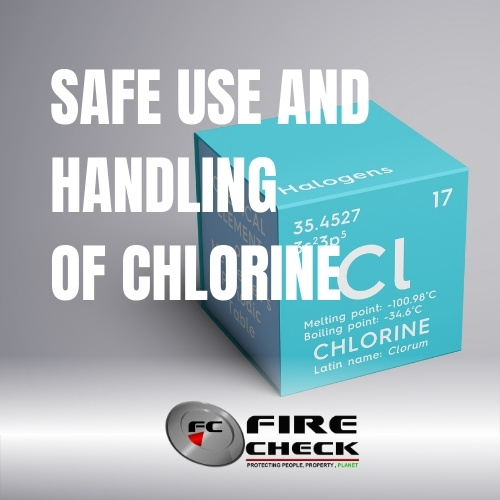
Safe Use and Handling of Chlorine
Fire Check
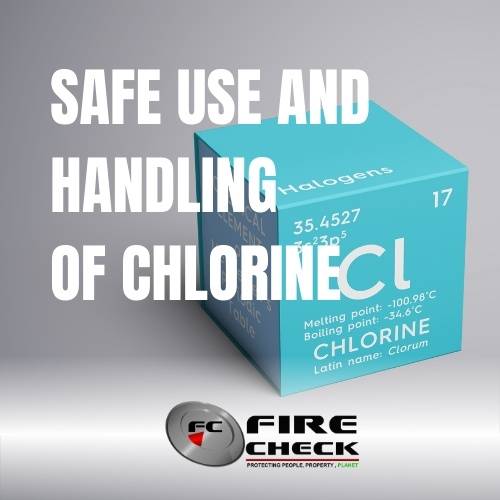
Safe Use and Handling of Chlorine
Safe Use and Handling of Chlorine |
|||||
|
Course Title |
Safe use and handling of Chlorine |
Unit Standard ID |
- |
Credits |
- |
|
Duration |
½ Day |
NQF Level |
- |
||
|
COURSE CONTENTS/OUTCOMES |
|||||
|
|
||||